
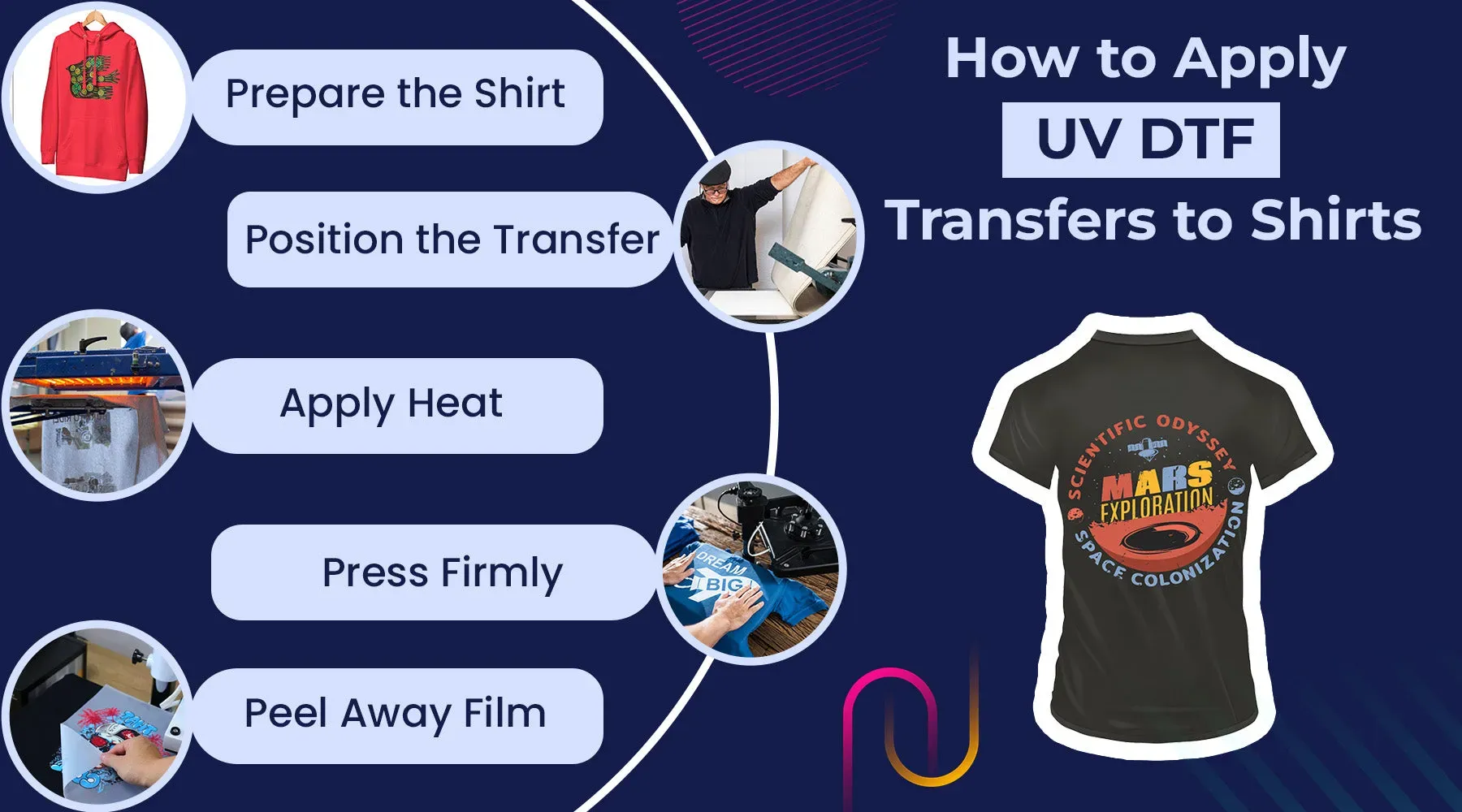
UV DTF transfer is redefining garment customization with vibrant colors, durable inks, and a streamlined workflow. This beginner-friendly guide blends insights from DTF printing and DTF transfer techniques to help makers master the process. Learn how to apply DTF transfers correctly, optimize heat press for DTF settings, and understand UV curing (DTF) implications for faster, reliable results. From color management to precise alignment and post-press care, you will gain practical steps that translate to crisp imagery and durable wear. Whether you are a hobbyist or running a busy shop, this introduction helps you start the transfer journey with confidence.
A contrasting framing is the UV-curable film transfer method, often described as a direct-to-film workflow that uses UV inks. Other terms you may encounter include DTF printing, UV curing-based transfers, and heat pressing for fabric, all pointing to a film-backed print bonded to textiles. In practical terms, this LSI-informed framing centers on rapid curing, precise alignment, and durable adhesion, core ideas echoed throughout this guide.
UV DTF transfer: Understanding the technology and its benefits
UV DTF transfer combines the versatility of DTF printing with the rapid curing of UV inks, delivering vibrant prints on a wide range of fabrics. This approach can shorten production timelines by reducing drying and curing steps, while preserving sharp detail and color fidelity. By leveraging UV-curable inks on a DTF film, operators can achieve strong adhesion after a standard heat press, with performance that rivals traditional dye-sub on many substrates. For shop owners and hobbyists, the UV DTF transfer workflow often translates to higher throughput and less handling risk between printing and pressing.
Understanding DTF transfer techniques is essential to getting consistent results. When you plan a UV DTF transfer, you should consider ink chemistry, film compatibility, and curing behavior to minimize misregistration and color shifts. The combination of DTF printing with UV curing can influence the choice of garment material, the need for an adhesive stage, and post-press handling. If you’re learning how to apply DTF transfers, start with clear guidelines on film thickness, curing time, and heat-press parameters to build a repeatable, scalable process.
Equipment and materials for reliable UV DTF transfer workflows
A dependable UV DTF transfer setup starts with a printer capable of producing UV-curable output on the chosen DTF film, paired with inks designed for UV curing. Selecting the right film is critical; UV-curable or specialized DTF films must withstand UV exposure and the heat press without cracking or bleeding. A dedicated curing device—such as a UV LED lamp or curing station—ensures consistent, rapid curing that supports high-volume runs and reduces handling times.
In addition to the printer and film, assemble a reliable heat press, protective sheets, and, if required by your film, a light adhesive powder or compatible liquid adhesive. PPE like heat-resistant gloves and clean, dust-free workspace are essential for safety and quality. Measuring tools, tape, and a stable setup help you maintain alignment across batches. With the right combination of UV curing (DTF) capabilities and a robust adhesive system, you’ll consistently produce durable transfers that hold up to washing and wear.
Design, color management, and print prep for UV DTF transfers
Effective design and color management are foundational to UV DTF transfers. Use appropriate color profiles (such as sRGB or device-specific profiles) and design with margins that anticipate edge-to-edge printing. Keeping artwork scalable and within a safe printable area minimizes issues during transfer. As you prepare artwork, test print on similar fabrics to confirm density, opacity, and color saturation before committing to a full run.
Print prep also involves careful placement and mirroring when required by the printing workflow. Create templates or grids to ensure precise alignment on the garment, and consider a temporary mask or masking tape to lock artwork in place. Understanding how to apply DTF transfers begins long before pressing—preparing garments, ensuring clean surfaces, and verifying that the film lies flat during printing reduce the chance of ghosting or misregistration in the final result.
Printing on UV DTF film and achieving proper UV curing (DTF)
Printing on UV DTF film requires selecting the correct print mode and film thickness to maximize detail and minimize bleed. Use settings optimized for film media to achieve crisp edges and strong color saturation, then immediately cure the print with a UV lamp or curing station. Uniform exposure across the entire print is essential to prevent hot spots or under-cured areas that could affect adhesion and durability.
Post-print checks should assess gloss level, ink coverage, and cure completeness. A quick visual inspection can reveal areas that may need re-curing or additional passes. If slight inconsistencies appear, plan a targeted cure for those regions rather than reprinting the entire design, preserving overall efficiency and material usage while ensuring a robust final result.
Heat press setup, garment alignment, and press parameters for DTF
Setting up the heat press with consistent parameters is critical for UV DTF transfers. Preheat the platen to the recommended range (for many fabrics around 160–170°C / 320–340°F) and ensure the surface is clean to prevent marks. A stable, flat substrate and correctly positioned transfer help prevent shifting during the dwell time, which is often 10–20 seconds depending on garment weight and film type.
Precise alignment is supported by using heat-resistant tape, masks, or templates to lock the transfer in place. Place a teflon or silicone cover sheet over the transfer to protect the print and garment from direct platen contact. When pressing, apply even, firm pressure and monitor the timing closely; adjustments may be needed for thicker fabrics or seam-heavy areas to avoid scorching while still achieving strong adhesion.
Troubleshooting, QC, and pro tips for durable UV DTF transfers
Common issues like color fading, edge cracking, or ghosting often point to curing, pressure, or alignment problems. If colors appear washed out, re-check the UV curing step and consider increasing cure time or ensuring even exposure. For peeling edges, confirm that curing is complete and that the adhesive method matches the fabric type; insufficient contact or misalignment can also cause this symptom.
Pro tips for consistent results include maintaining stable room conditions, performing test swatches for each fabric type, and documenting the optimal temperature, time, and pressure for future batches. Regular maintenance of platens and curing lamps, plus careful garment prep, reduces variability and improves long-term durability. Keeping a log of successful recipes helps you scale your UV DTF transfer production with confidence and repeatability.
Frequently Asked Questions
What is UV DTF transfer and how does UV curing affect its performance compared with traditional DTF printing?
UV DTF transfer uses UV curable ink printed on a DTF film and then bonded to fabric via heat pressing after a UV curing step. This differs from traditional DTF printing, which relies on an adhesive powder and heat bonding. The UV curing step provides faster drying, crisper detail, and better color fidelity, helping reduce smudges and streamline workflows in UV DTF printing.
What are the main DTF transfer techniques used with UV DTF transfer and how do powder based versus powder free approaches impact the workflow and UV curing steps?
Key DTF transfer techniques for UV DTF transfer include printing on UV curable film, curing the print with a UV light source, and applying the transfer with a heat press. Some UV DTF workflows use an adhesive powder, while others are powder free or use liquid adhesives. Powder based methods require dusting, fusing the powder, and removing excess powder before transfer, whereas powder free methods rely on the film or liquid adhesive for bonding; UV curing remains a separate step prior to pressing in most setups. Choose method based on film specifications, fabric type, and your curing equipment.
How do you apply DTF transfers in a UV DTF transfer workflow using a heat press for DTF?
Follow a standard UV DTF transfer workflow: preheat the garment for 3 to 5 seconds, position the print face down on the fabric, cover with a teflon or silicone sheet, and press at about 160 to 170 C (320 to 340 F) for 10 to 20 seconds with even pressure. Use heat resistant tape to secure alignment, then lift the press evenly and peel the film while warm for best adhesion. If you used a powder or liquid adhesive, follow the manufacturer guidance for curing and removal before transfer.
What heat press settings do you use for UV DTF transfer and how should you adjust for different fabrics compared to standard DTF?
Typical UV DTF transfers use a heat press in the range of 160–170 C (320–340 F) with 10–20 seconds of dwell time and medium to firm pressure. Heavier fabrics may require shorter dwell times and higher pressure, while lighter fabrics may tolerate longer times and gentler pressure. Always preheat the garment and use a teflon sheet to protect the print, then peel warm for best results. Compare with standard DTF and adjust based on fabric type and film recommendations.
What common issues occur with UV DTF transfer and UV curing and how can you troubleshoot misalignment, ghosting, or poor adhesion?
Common issues include misalignment shifts, ghosting on the print, and poor adhesion. To troubleshoot, ensure precise alignment using templates or rulers, and secure the transfer with heat resistant tape during pressing. Check UV curing to confirm full cure before pressing; insufficient cure can cause fading or smudging. If ghosting occurs, verify moisture in the fabric and re cure specific areas; for adhesion problems, confirm the adhesive method and follow the film supplier guidelines and temperature/time recommendations. Perform test swatches to dial in parameters.
What equipment and materials are essential for a UV DTF transfer workflow including UV curing and heat pressing?
Essential equipment includes a printer compatible with UV DTF film and UV curable inks, a UV curing device or UV LED lamp, UV DTF film, an adhesive system if required (powder or liquid), a heat press with adjustable temperature and time, teflon or silicone release sheets, a clean workspace, and alignment tools such as templates, rulers, or gages. Also include heat resistant gloves and clean pre washed garments. This setup supports reliable UV curing and consistent heat pressing for DTF printing.
| Section | Key Points |
|---|---|
| Section 1: What you need (equipment and materials) | – Printer and UV-curable inks; UV DTF film or DTF film; curing device (UV LED lamp or curing station); adhesive system if required; heat press with adjustable temp/time; silicone release sheet; garment prep (clean, pre-washed); measuring tools; PPE and dust-free workspace. |
| Section 2: Design, print prep, and alignment | – Color management (sRGB/CMYK as appropriate); true-to-size design; use templates/grids; mirror if required; run a test print; pre-press prep (preheat garment 3–5s; use teflon/silicone sheet; secure garment). |
| Section 3: Printing on UV DTF film and UV curing | – Use highest-quality film mode; optimize ink density; cure immediately with UV light for sharpness and durability; ensure even exposure; post-cure check for gloss and coverage. |
| Section 4: Preparing the film for transfer (optional powder stage) | – Powdered route: lightly apply adhesive powder and fuse; ensure even coating and brush away loose powder; powder-free route: follow film guidelines (adhesive may be liquid or none); perform a pre-transfer cure check. |
| Section 5: Heat press setup and garment alignment | – Preheat platen to target temp (approx. 160–170°C / 320–340°F); align with tape; use templates or rulers for accuracy; start with medium–firm pressure; dwell 10–20s; use a cover sheet to protect printing. |
| Section 6: The transfer process (step-by-step) | – Steps: 1) position garment; 2) place transfer print-side down; 3) cover with teflon; 4) press at recommended temp for 10–20s with even pressure; 5) lift press evenly; 6) peel warm for best adhesion; monitor for ghosting, pressure, and cure quality. |
| Section 7: Post-press care and finishing touches | – Peel while warm; allow to cool 24–48h; wash inside-out with mild detergent in cold/warm water; avoid chlorine bleach; iron on reverse side if needed with protective sheet. |
| Section 8: Troubleshooting common issues | – Faded colors: verify curing; re-cure or extend curing slightly; cracking/peeling: check pressure and dwell; ink bleed: ensure full cure and flat film; sticky finish: address fabric moisture; misalignment: improve masking/templating. |
| Section 9: Pro tips for professional results | – Quality control at each step; maintain stable temp/humidity; test swatches on same fabric; document optimal temp/time/pressure per fabric; keep equipment clean and lights calibrated. |
Summary
Conclusion: UV DTF transfer processes require careful preparation, precise heat application, and reliable UV curing to achieve vibrant, durable results. By mastering design, material selection, printing, curing, adhesion methods, and pressing parameters, you can deliver professional UV DTF transfer results across a variety of fabrics. Practice with test pieces, refine workflows, and develop repeatable procedures to improve consistency for clients or personal projects. A well-planned workflow, attention to fabric type, and consistent control of heat, time, and pressure are the keys to high-quality UV DTF transfer outcomes.