
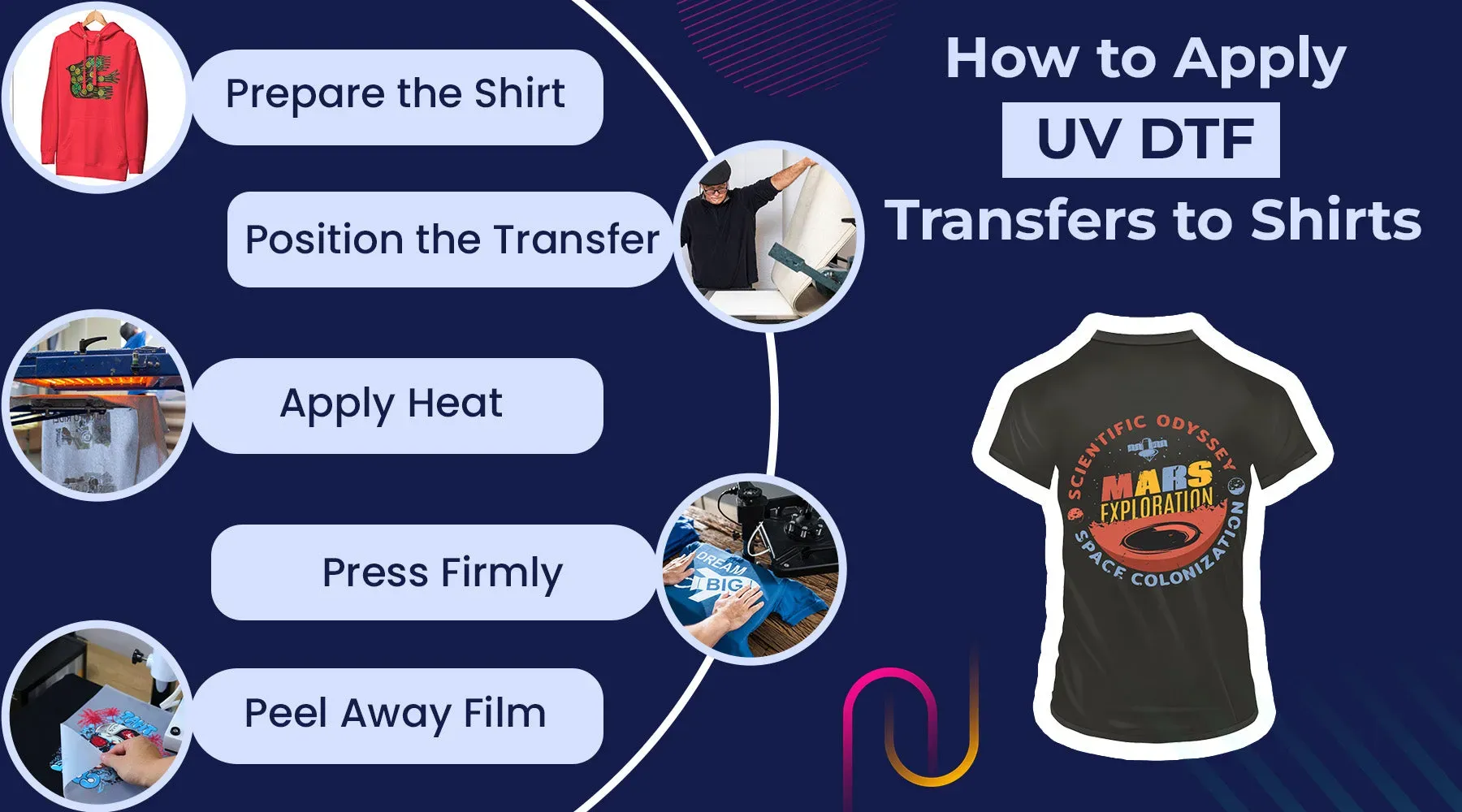
UV DTF transfer has emerged as a versatile option for apparel, crafts, and promotional items, blending the strengths of direct-to-film printing with the fast curing of UV inks. This approach aligns with modern production workflows, offering a clear comparison to traditional methods. For those evaluating options, grasping the core mechanics of the method helps you weigh color vibrancy, durability, and print fidelity across fabrics and surfaces. The combination of UV-curable inks and a film carrier enables crisp details and reliable bonding under heat and pressure. If you’re new to the method, keep an eye on substrate compatibility, heat-press settings, and adhesive coverage to maximize durability and color retention.
Reframing the topic with alternative terminology, this approach can be described as a UV-curable ink transfer on film, a film-based print-to-substrate workflow, or a direct-to-film coating method tailored for textiles and hard surfaces. The core concept remains printing onto a transfer film with UV-curable inks, then bonding the image to the target material through heat and pressure. In practical terms, practitioners may refer to a film carrier workflow or carrier-based application, emphasizing adhesion, color vibrancy, and durability. This LSI-informed framing helps readers connect related topics such as color management, substrate compatibility, and post-press finishing, enabling broader discovery across textiles, plastics, and composites.
UV DTF transfer technology: How it works and why it matters
UV DTF transfer technology uses UV-curable inks printed onto a transfer film. The inks cure instantly when exposed to UV light, speeding production and reducing ink swelling, which helps preserve fine lines and gradients on textured fabrics. This instant curing is a core aspect of how DTF works in the UV variant and aligns with UV printing on transfer media for tight color control and high detail.
Because the design is printed on a film carrier before bonding, the process leverages a powder adhesive and a heat-press regimen to secure the image to the substrate. This relationship—UV printing on transfer combined with film-based bonding—drives predictable adhesion, vibrant color, and strong wash resistance as part of the DTF transfer process.
DTF transfer process: Step-by-step guide from design to finish
DTF transfer process begins with design and color management. Create or import artwork, then calibrate colors for the UV ink set and transfer film to ensure legibility, edge sharpness, and color balance across surfaces.
Next, print on the transfer film using direct-to-film printing with UV inks. The ink cures instantly, enabling fast production cycles and a highly detailed image with dense color. After printing, apply a bonding layer of adhesive powder while the ink is tacky and, in many workflows, perform a light pre-cure to fix the powder before heat pressing.
Substrate compatibility and print quality optimization for UV DTF transfers
UV inks are versatile across substrates such as cotton, cotton blends, polyester, and poly-blends. When prepared correctly, these fabrics can deliver rich color depth and good wash durability, especially when the adhesive is calibrated to the substrate. This makes UV DTF transfers effective on both natural and synthetic materials.
For hard surfaces and composites, ensure substrate preparation and compatible adhesive bonding. Dark fabrics often require a white underbase in DTF workflows to preserve brightness and contrast, and this practice remains beneficial with UV inks when aiming for vivid, stable color on challenging materials.
Durability and care: achieving colorfast, long-lasting UV DTF transfers
When the process is optimized, UV DTF transfers offer strong colorfastness and wash resistance across many fabrics because the film carries a cured image bonded with heat and adhesive. Careful calibration of temperatures, dwell times, and pressure contributes to a durable finish that withstands repeated use.
Care guidelines help maximize longevity: turn garments inside-out, follow manufacturer-recommended wash temperatures, and avoid aggressive detergents that can degrade coatings. For hard surfaces or plastics, avoid abrasive cleaners and high-impact scrubbing that could wear the film or adhesive over time.
Applications, use cases, and troubleshooting for UV DTF transfer
UV DTF transfers are well suited for custom apparel lines, team uniforms, promotional items, and branded overlays on hard surfaces like phone cases, laptop sleeves, and plastic panels. The combination of vibrant color, fine detail, and broad substrate compatibility enables flexible short- to mid-run production.
Troubleshooting tips cover common issues such as color mismatches, ghosting, peeling, and wrinkling. Revisit color management and ICC profiles, verify adhesive coverage and uniform heat, and ensure substrate compatibility. Practical checks like swatch testing and a small production run before scaling help prevent costly overruns.
UV DTF transfer vs. DTG, DTF, and screen printing: a practical comparison
UV DTF transfer blends direct-to-film printing with UV-curable inks to deliver fast curing and robust color fidelity. When compared with traditional DTF using solvent- or water-based inks, UV DTF often achieves crisper edges and more consistent results on a wider range of substrates.
Compared with DTG, UV DTF provides broader substrate versatility and typically stronger edge definition; compared with screen printing, UV DTF is better for full-color, photographic graphics on varied materials and for faster, more predictable production at small to mid-sized runs.
Frequently Asked Questions
What is UV DTF transfer technology and how does it differ from traditional DTF methods
UV DTF transfer technology uses UV curable inks printed on a transfer film and bonded to fabrics or hard substrates with heat and pressure. The inks cure instantly under UV light, reducing dry time, swelling, and handling while delivering crisp edges and high color density. This approach blends film based transfer with UV curing to improve color fidelity and durability across a wide range of substrates.
How does the DTF transfer process work when using UV printing on transfer media for UV DTF transfer
The DTF transfer process with UV printing on transfer media starts with design and color management, then printing the image onto a transfer film using UV inks. The ink cures instantly, enabling fast production and strong color density. A bonding powder is applied to the print while tacky, followed by optional pre curing, heat pressing to bond the image, and finally peeling and post processing as needed.
What benefits does UV printing on transfer provide for color accuracy and durability in UV DTF transfer
UV printing on transfer offers high resolution, sharp edges, and strong color vibrancy thanks to the instant cure of UV inks. Because the ink sets immediately, there is less edge feathering and image bleed, which helps preserve gradients and detail on various fabrics. Proper color management and substrate testing are still important to maintain long term durability and wash resistance.
What is direct-to-film printing in the context of UV DTF transfer, and how does it compare to DTG or screen printing
Direct-to-film printing in the UV DTF transfer workflow uses a film as the carrier for the image and adhesive powder, enabling a flexible path from design to substrate. Compared with DTG it can be more versatile across fabrics and shapes, and with UV curing it delivers crisper edges and faster production. Compared with screen printing, UV DTF transfer is ideal for full color photographic style designs, lower setup cost for short runs, and on a wider range of materials.
How does substrate compatibility affect UV DTF transfer results and what role do heat press settings play in this DTF transfer process
Substrate compatibility matters, with cotton, blends, and polyester responding well to UV DTF transfer when the adhesive and cure are optimized. Dark fabrics often require a white under base to preserve brightness, while hard surfaces may need surface prep for bonding. Heat press settings such as time, temperature, and pressure must be calibrated per substrate to ensure strong adhesion without scorching or edge distortion.
What troubleshooting tips help resolve issues like color mismatches or peeling in UV DTF transfer throughout the DTF transfer process
Begin with color management, ICC profiles, and a test print on representative substrate to verify color accuracy before production. Check adhesive coverage and ensure even heat and pressure during the heat press cycle to prevent peeling, halos, or edge artifacts. Confirm the substrate is clean and compatible with the adhesive, and perform wash and wear tests to validate durability across batches.
| Aspect | Key Points |
|---|---|
| Technology behind UV DTF transfer | – UV-curable inks print on a transfer film; inks cure instantly under UV light. – Benefits: minimal swelling, faster drying, crisp details, high color density. – Transfer film carries the design; adhesive powder bonding layer enables bonding to substrates under heat/pressure. – Combines film-based transfer and UV curing for faster production and improved color fidelity. |
| DTF transfer process overview (step-by-step) | – Design & color management; calibrate colors for UV ink set and film. – Print on transfer film with UV inks (fast curing). – Apply bonding powder evenly to the printed film. – Optional pre-cure to fix powder. – Heat-press transfer to substrate with specified dwell time. – Peel and finish; optional second press for edges. – Post-processing and care to maximize longevity. |
| Substrate compatibility & print quality | – Suitable for cotton, blends, polyester; works on certain hard surfaces when prepared properly. – Dark fabrics: white underbase often recommended to preserve brightness. – Hard surfaces/composites: ensure substrate/adhesive compatibility and proper surface prep (cleaning/abrading). – Quality management: color management, calibration, controlled heat-press parameters; handle printed film with care to avoid scuffing. |
| Durability & care | – Strong colorfastness and wash durability when optimized. – Adhesive bonding + heat create robust bonds; durability varies by substrate and care. – Care: follow wash guidelines; turn garments inside-out; avoid high-heat drying; minimize direct sunlight exposure on graphics. |
| Applications & use cases | – Custom apparel and team uniforms with bright graphics. – Promotional items (bags, hats, jackets) with full-color designs. – Brand overlays on hard surfaces (phone cases, laptop sleeves, plastics). – Limited-run merchandise with fast production and reliable color rendering. |
| Troubleshooting & optimization | – Color mismatches: revisit color management and ICC profiles; test on representative substrate. – Ghosting/halos: ensure uniform adhesive coverage and consistent heat/pressure. – Peeling/delamination: verify substrate cleanliness and adhesive compatibility; adjust dwell time or pre-treat as needed. – Wrinkles/nozzle gaps: check film tension and feeding consistency. |
| UV DTF in practice vs other methods | – Compared to traditional DTF (solvent/water-based inks): faster curing and potential color fidelity gains. – Compared to DTG: broader substrate versatility and crisper edges on complex graphics; softer hand on cotton-specific items may vary. – Compared to screen printing: cost-effectiveness for high-volume solid colors; UV DTF excels in full-color, photographic designs across materials. |
| Practical considerations & QA | – Ink/film compatibility with transfer films and press settings. – Uniform adhesive application for consistent bonding. – Calibrated heat-press time, temperature, and pressure per substrate. – Post-press finishing and cooling; implement QA with swatch tests and wash tests. |
| Conclusion (summary) | – UV DTF transfer integrates film-based transfer with UV-curable inks to deliver fast curing, vivid color, and durable results across fabrics and some hard surfaces. – A well-designed workflow—design, printing, bonding, heat-press, and post-care—yields reliable color fidelity and strong adhesion. – Ideal for small- to mid-size runs needing full-color graphics and efficient production, with ongoing testing and color management maximizing longevity and minimizing issues. |
Summary
Conclusion: UV DTF transfer represents a practical fusion of film-based transfer and UV-curable inks. By understanding the technology, mastering the DTF transfer process, and optimizing substrate preparation and heat-press conditions, you can achieve vibrant, durable results on a wide range of fabrics and hard surfaces. Whether you are creating custom apparel, promotional items, or branded goods, UV DTF transfer offers the flexibility and performance you need to bring complex, full-color designs to life with efficiency and consistency. As with any printing method, ongoing testing, color management, and careful attention to materials will help you maximize results and minimize issues across batches.