
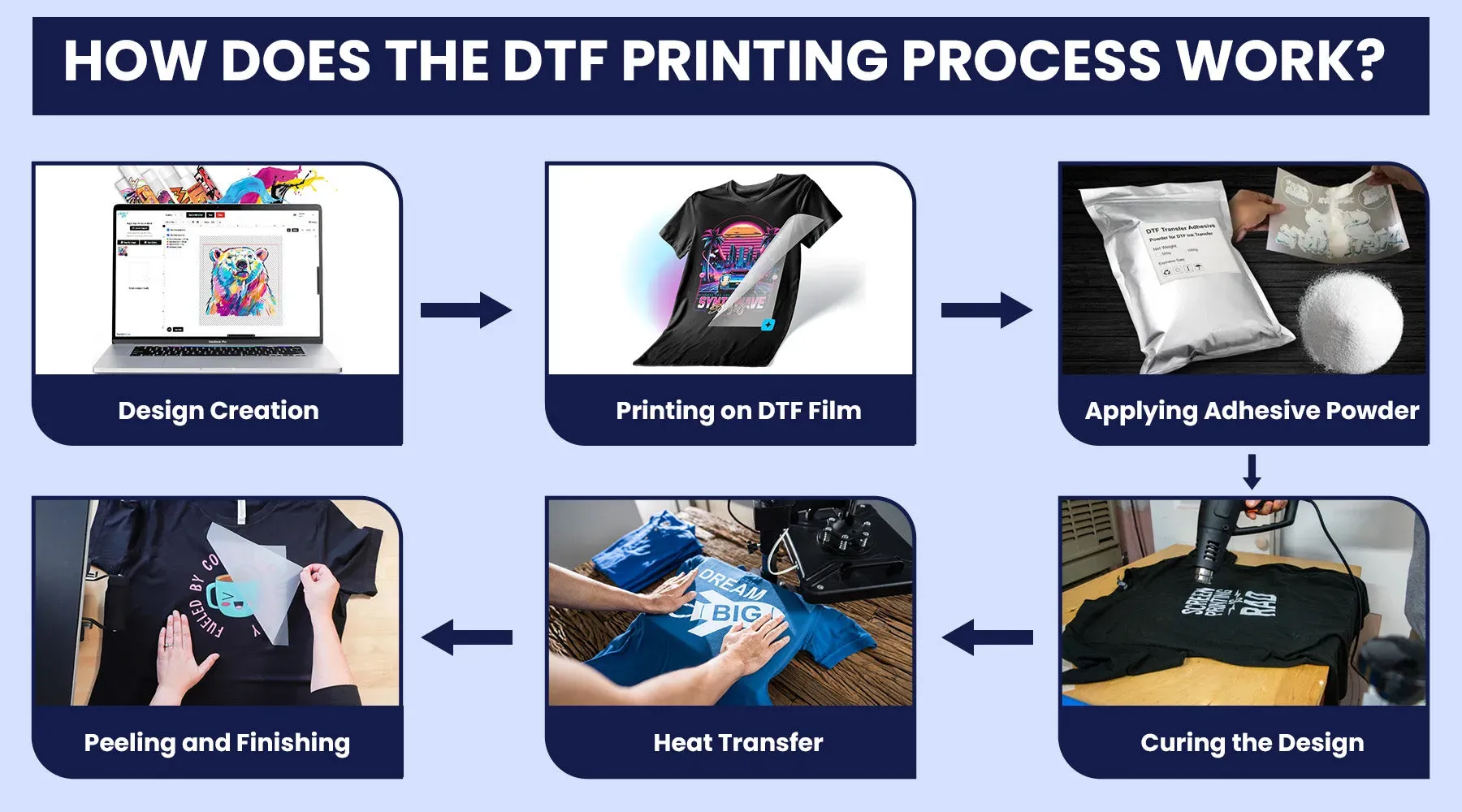
DTF Techniques have reshaped how brands, hobbyists, and small shops approach garment customization. At the core, designers print graphics onto a transfer film using water-based inks, apply adhesive powder, cure, and press the image onto fabric. This process, sometimes called DTF printing or Direct-to-film, yields vivid, durable results on cotton, blends, and select synthetics. Finishes like DTF matte finish and DTF gloss finish define the final look, while specialty DTF finishes widen design possibilities. By optimizing workflow and finish selection, you can preserve color, hand feel, and wash durability across projects.
Beyond the name, this approach to fabric decoration centers on a film-based transfer that moves artwork from a coated sheet to textile via heat and pressure. Alternative terms like Direct-to-film printing, film-to-fabric transfer, and ink-on-film techniques reflect the same underlying method while appealing to different search intents (LSI). Practitioners think in terms of the transfer film, adhesive powder, curing, and pressing parameters to control texture, gloss, and durability. Understanding these related phrases helps align content with related searches while maintaining precise messaging about matte, gloss, and specialty finishes.
DTF Printing 101: From Direct-to-Film to Garment
DTF printing is a streamlined approach to garment decoration where a design is created and printed onto a specialized transfer film using water-based inks. After printing, adhesive powder is applied, the image is cured, and then heat and pressure are used to transfer the artwork onto a fabric. The result is a durable, flexible print that can adapt to a wide range of fabrics, from cotton-rich blends to some synthetics, while maintaining bold color and an appreciable hand feel.
In practice, Direct-to-film technology enables on-demand customization for brands, hobbyists, and small shops. By leveraging the transfer film, the process can yield vibrant graphics with strong wash durability and compatibility across different substrate types. This foundation also sets up the discussion of finishes—matte, gloss, and specialty—that influence aesthetics, texture, and perceived quality.
DTF Techniques: Finishes, Terminology, and Outcomes
DTF Techniques describe the sequence of decisions that shape the final look and feel of a print via Direct-to-Film processes. The core finish options—matte, gloss, and specialty DTF finishes—are driven by aesthetic goals and functional requirements such as wash fastness, stretch, and compatibility with screen-printed layers.
Understanding these finishes involves recognizing how a matte DTF finish, a gloss DTF finish, or a specialty DTF finish will interact with fabric type and color palette. The chosen finish influences perceived quality, color depth, and the garment’s hand, making workflow setup, material selection, and curing strategy all the more critical for achieving consistent results.
Matte DTF Finish: Achieving Subtle Sophistication
A DTF matte finish delivers a soft, non-reflective surface that blends well with casual and fashion-forward designs. This look is favored for streetwear and athleisure where a subdued aesthetic complements textured fabrics and muted palettes. Achieving the matte effect often involves selecting a matte top layer or powder and precisely tuning curing time and temperature to minimize shine.
To optimize matte results, manage fabric compatibility (cottons and blends respond well) and adjust color profiles to preserve depth without unwanted gloss. Practical steps include experimenting with different matte powders, controlling heat press parameters, and running swatches on representative fabrics to verify that the final print maintains a soft hand and consistent tone across production lots.
Gloss DTF Finish: Bright Colors and Edge Definition
A gloss DTF finish delivers high-impact visuals with vibrant color, crisp edges, and a reflective surface that makes graphics pop. This finish is particularly effective for graphic-heavy designs, photo-real images, and branding elements that benefit from strong visual clarity on multiple fabric types.
Achieving durable gloss requires careful tuning of curing conditions, powder selection, and press settings to prevent dulling or over-curing. Using gloss-oriented top coats or powders can help preserve sparkle, while testing across cotton, poly blends, and selected synthetics ensures consistent gloss levels and edge fidelity across substrates.
Specialty DTF Finishes: Texture, Pearlescent, and That Wow Factor
Specialty DTF finishes expand creative opportunities beyond matte and gloss, introducing textures, pearlescent effects, metallic sheens, and even glow-in-the-dark looks. These finishes can differentiate products and enable premium price points by adding tactile interest or color-shift visuals that respond to lighting.
Implementing specialty finishes often requires multiple passes, careful layering, and, in some cases, a post-process sealant to preserve the intended texture after washing. Planning the effect early, testing on target fabrics, and clear care instructions help ensure customers understand maintenance requirements and that the specialty look remains vibrant and durable across wear and laundering.
Workflow, Materials, and Quality Control for Consistent DTF Results
A robust DTF workflow starts with design and color management, then moves through printer setup, powder application, curing, and transfer to fabric. Selecting reliable materials—transfer film compatible with your printer and inks, as well as powders labeled for matte, gloss, or specialty finishes—lays the groundwork for consistent results.
Quality control across batches is essential for scalable production. Regular calibration of color profiles, nozzle checks, and print resolution helps maintain color accuracy, while checks for powder coverage, cure consistency, and transfer alignment prevent defects. Documentation, standard operating procedures, and finish libraries for each substrate ensure predictable outcomes when delivering matte, gloss, or specialty looks to clients.
Frequently Asked Questions
What is DTF printing in Direct-to-Film and how do you achieve a DTF matte finish versus a DTF gloss finish?
DTF printing (Direct-to-Film) involves designing artwork, printing it onto a transfer film with water-based inks, applying adhesive powder, curing, and then transferring the image to fabric with heat and pressure. A DTF matte finish is achieved using a matte powder or top coat and a careful cure to minimize shine, resulting in a soft, non-reflective surface with a smooth hand. A DTF gloss finish uses gloss-focused powders/top coats and precise curing to produce bright colors and a shiny surface. Both finishes require proper color management, suitable fabrics, and post-transfer care to balance color, durability, and hand feel.
Which fabrics and care considerations make a good canvas for a DTF matte finish in Direct-to-Film workflows?
DTF matte finishes work well on cotton-rich fabrics and many blends, where the non-glossy surface complements the garment’s texture. Test swatches on your target fabrics to confirm color depth and hand feel, then optimize heat, time, and powder density to minimize shine. Care guidance should reflect the matte surface’s forgiving nature, with washing recommendations that preserve texture and reduce gloss in high-wear areas.
When choosing between a DTF matte finish and a DTF gloss finish for a design, what factors from DTF techniques should guide the decision?
Let the finish’s look guide the choice. DTF matte finishes offer a soft, understated aesthetic and a subtle hand feel, while DTF gloss finishes provide brightness, edge crispness, and color punch. Consider the fabric type, design colors, lighting conditions, and end-use (daily wear vs. showpiece). Testing swatches helps verify how each finish affects color depth, texture, and wash durability before production.
What are specialty DTF finishes, and how do they alter the workflow, care, and end-use of Direct-to-Film prints?
Specialty DTF finishes include textures, pearlescent or iridescent effects, metallic accents, or color-shift visuals. They add differentiation and can broaden pricing tiers but often require additional workflow steps such as multiple passes, layered top coats, or post-process sealing. These finishes may demand careful care instructions, as some textures or metallics can be more sensitive to abrasion or washing than standard matte or gloss finishes.
What is a practical workflow for consistent DTF techniques across matte, gloss, and specialty finishes in Direct-to-Film printing?
A reliable workflow follows core DTF steps with finish-aware tweaks: 1) design and color management that anticipates finish appearance; 2) select compatible inks and media for your chosen finish; 3) even powder application and appropriate curing; 4) transfer with proper heat, pressure, and timing; 5) post-transfer care and documentation. Maintain finishing libraries for each fabric and finish, use standardized press times, and implement multi-stage QA to ensure consistency across matte, gloss, and specialty looks.
What common challenges arise with DTF techniques (matte, gloss, specialty finishes) and how can you troubleshoot them in a Direct-to-Film workflow?
Common issues include matte areas appearing shiny due to uneven powder or insufficient cure, gloss prints showing color bleed or halos from improper color management or over/under-curing, and specialty finishes losing texture after washing. Troubleshoot by recalibrating color profiles and curing parameters, testing swatches on target fabrics, adjusting powder application, and, if needed, applying a protective top coat for durability. Also verify fabric compatibility and follow care instructions to preserve the chosen finish.
| Aspect | Key Points |
|---|---|
| What is DTF and basic process | Print design on a transfer film with water-based inks, apply adhesive powder, cure, then transfer with heat/pressure to fabric; yields vivid, durable prints on cottons, blends, and some synthetics. |
| Finish options | Matte (soft, non-shiny), Gloss (bright, shiny), Specialty (textures, pearlescent/metallic); finish choice affects look, hand feel, wash durability, and compatibility. |
| Matte finishes | Soft, non-reflective look; good on cotton-rich fabrics; may mute very bright colors; use matte top layers/powders and optimized curing; test swatches. |
| Gloss finishes | Bright, vibrant colors with sharp edges; works across fabrics; can reflect light affecting legibility on light garments; proper curing needed for durability. |
| Specialty finishes | Textures, pearlescent/metallic effects, or color-shift visuals; offer differentiation; may require layering and post-process sealing; plan care instructions carefully. |
| Workflow setup | Design/color management; ink/film selection; powder application and curing; transfer heat/pressure; post-transfer care; adjust times/temps by fabric and finish. |
| Materials & QC | Transfer film, inks with good density and wash durability; suitable powders; regular printer calibration; reliable heat press; test on common fabrics. |
| Troubleshooting & scalability | Common issues: matte shine inconsistencies, color halos, texture loss; use SOPs, finish libraries, QA checks, and client feedback to improve results. |
Summary
End of table.