
DTF Printing Guide opens a practical doorway into Direct-to-Film printing for beginners and pros alike. This comprehensive overview explains how the technology works, from the core concept to the practical steps you’ll take in a shop. You’ll compare DTF vs DTG to decide the best approach, and you’ll follow clear DTF printing steps to reduce reprints. The guide emphasizes a streamlined workflow, color management, and substrates so you can scale from hobby projects to production runs. By applying the tips here, you’ll gain confidence in delivering vibrant, durable results across fabrics.
Beyond product names, the technology is best understood as a film-based pigment transfer process that pairs a printed film with a heat-set adhesive to yield a soft, durable finish that remains comfortable on the wearer and holds color through repeated washes. This perspective highlights how the system benefits short-run production, quick setup, and the ability to decorate a wide range of fabrics without the commitment and complexity of traditional screen printing, making it appealing to small shops, startups, and independent makers. From a search optimization standpoint, think of this as ink-on-film workflows, powder-assisted cures, and heat-press steps that connect design decisions to tangible results, including color vibrancy, wash resistance, and hand feel. A careful focus on color management, substrate compatibility, and process control helps shops deliver consistent results, whether producing a single custom tee or a multi-size release, and it encourages a data-driven approach to troubleshooting. The key strategic questions center on cost per unit, setup time, run length, and the range of fabrics you can reliably decorate, allowing you to tailor your approach to your market while maintaining quality. As you explore, consider how the technique compares to alternative methods in terms of versatility, ease of use, color fidelity, and long-term durability across washes. With the right equipment, materials, and testing regimen, you can build a scalable workflow that balances speed, cost, and creative freedom. In practice, successful shops map design files to substrate specifics, calibrate printers and powders, and develop transfer-ready protocols that survive washing, abrasion, and daily wear, ensuring repeatable results. Readers will find checklists, glossaries, and practical tips woven through the later sections of the guide, reinforcing learning and helping teams onboard new technicians. In short, the DTF approach offers a flexible, scalable path from curiosity to consistent, market-ready results.
DTF Printing Guide: Understanding the Core Process
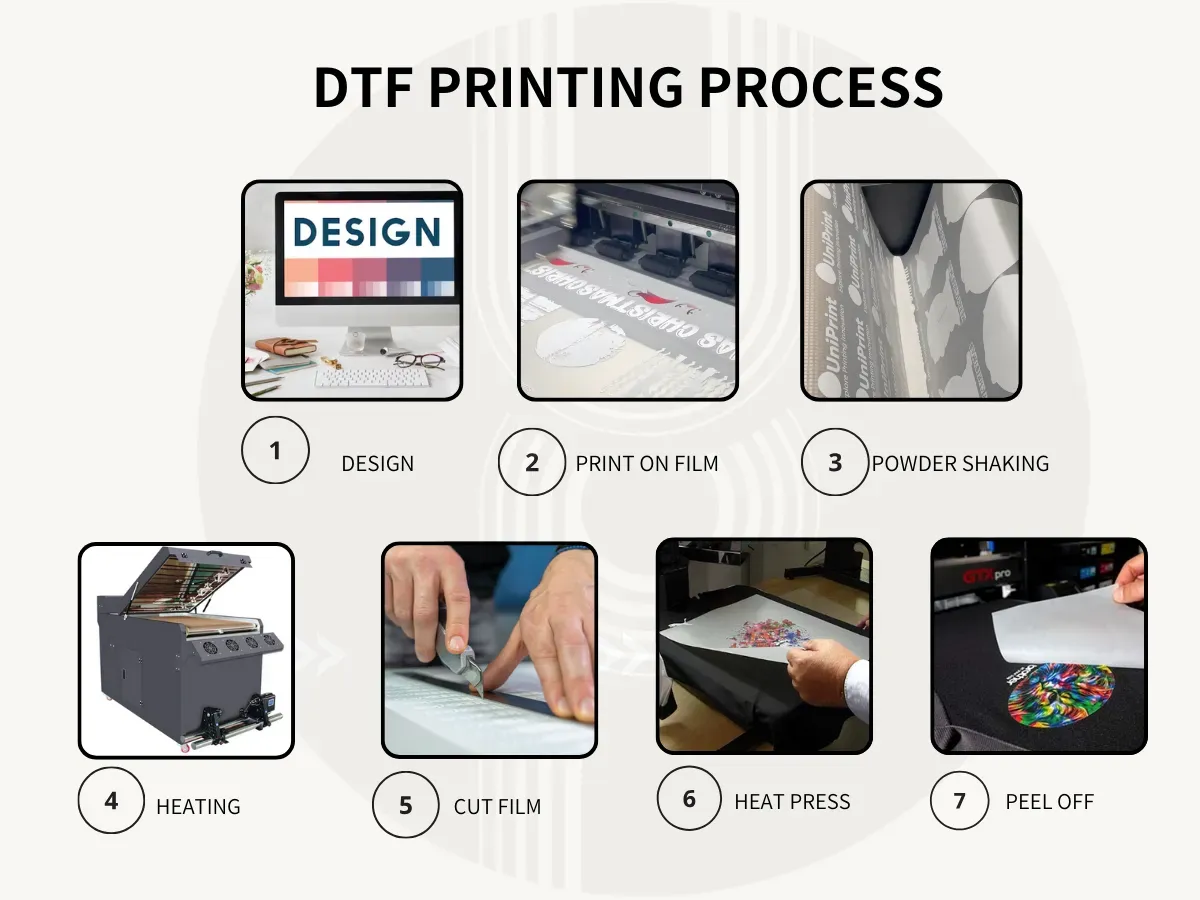
Welcome to the DTF Printing Guide as you begin with Direct-to-Film printing. This guide explains the core process: printing color onto a special transfer film using DTF inks, applying a bonding powder, curing, and final transfer to fabric with heat. The result is a durable, vibrant image that maintains a soft hand on most textiles. This overview sets the stage for understanding how DTF transfers come together from film to garment.
Understanding DTF vs DTG is essential for deciding which path suits your shop. The DTF vs DTG comparison highlights differences in setup costs, production speed, substrate compatibility, and color versatility, helping you choose a workflow that scales with demand.
DTF Films, Inks, and Surfaces: Choosing the Right Components
Selecting the right DTF film is about edge definition, transparency, and compatibility with your DTF inks. A high-quality film provides a stable printing surface, allows for predictable bonding powder adhesion, and yields sharp edges on transfers.
Pairing the film with the correct DTF inks—consider ink viscosity, pigment stability, and color gamut—ensures faithful color reproduction and durable transfers. The substrate you print on will also influence the final look, so evaluate fabric blends, cotton, polyester, and blends for best results.
DTF Printing Steps: A Practical Roadmap from Design to Transfer
The DTF printing steps begin with designing in the right color space, ensuring the artwork fits within the printer’s color gamut, and preparing the file for accurate output. This stage emphasizes design readiness, substrate planning, and color management to minimize reprints.
Then print onto the DTF film with calibrated settings, apply the bonding powder, cure it properly, and align the garment for transfer. The process culminates with a heat press transfer, delivering crisp images via the DTF transfers workflow.
DTF vs DTG: Choosing the Best Path for Your Shop
DTF can excel for short runs and varied fabrics because it avoids the per-color screen setup required by traditional methods and supports a wider substrate range. The DTF transfers approach often delivers faster turnarounds and lower upfront costs than DTG in many scenarios.
Evaluate your design needs, color complexity, and order volume when weighing DTF vs DTG. When you print on dark garments or non-cotton fabrics, DTF often provides a more reliable result, whereas DTG shines on white or light fabrics with high-detail images.
Optimizing Color and Image Quality with DTF Inks and Profiles
Color management starts with selecting DTF inks that match your film and printer. Build accurate color profiles, calibrate the printer, and use color gamut mapping to achieve vibrant, wash-fast results across fabrics.
Substrate considerations impact vibrancy as well. Cotton, polyester, and blends respond differently to heat and adhesive, so create targeted profiles for the common fabrics in your shop and test prints to verify results.
Troubleshooting and Best Practices for Reliable DTF Transfers
Common challenges include adhesion issues, color shifts, film edge flaking, ghosting, and reduced wash durability. Troubleshooting starts with validating bonding powder application, curing temperature, and even heat distribution in the press.
Establish SOPs, implement ongoing QC, and maintain documentation of settings and outcomes. Regular testing on representative fabrics helps you catch drift early and keep DTF transfers consistent over time.
Frequently Asked Questions
What is the DTF Printing Guide, and how can it help me decide between DTF vs DTG?
The DTF Printing Guide provides a comprehensive overview of Direct-to-Film technology and a practical comparison with DTG. It covers workflows, substrate compatibility, costs, and when DTF transfers offer advantages like versatility and shorter setup for short runs, helping you choose the right method for your shop.
How do DTF inks affect color accuracy and wash durability according to the DTF Printing Guide?
DTF inks determine color gamut, brightness, and ink stability. The guide emphasizes matching ink chemistry to the film and heat-transfer process to maximize color accuracy and wash durability across fabrics.
What are the essential DTF printing steps outlined in the DTF Printing Guide?
Key DTF printing steps include: 1) prepare the design with color management in mind, 2) print onto the DTF film with appropriate inks, 3) apply and cure bonding powder, 4) prepare and align the garment, 5) perform the transfer with heat and pressure, and 6) perform post-transfer handling for a durable finish.
Why is DTF film important in the DTF Printing Guide, and how does film quality influence the transfer?
DTF film is the carrier that carries the printed image through curing and transfer. Film quality impacts image sharpness, color depth, and adhesion; choosing a film compatible with your inks and proper handling reduces defects and improves transfer durability.
When should I choose DTF transfers versus other methods, according to the DTF Printing Guide?
DTF transfers are often preferred for short runs, a wide range of fabrics, and lower setup costs, while DTG may excel for very high-resolution, full-color designs on light fabrics. Use the guide to weigh factors like volume, substrate variety, and color requirements for your specific project.
What common issues does the DTF Printing Guide cover, and what practical fixes does it offer?
Common issues include adhesion problems, color shifts, edge flaking, ghosting, and wash durability. Practical fixes involve verifying curing temperatures and powder adhesion, adjusting ink viscosity and head height, ensuring precise registration, and following proper wash care to maintain longevity.
| Aspect | Key Points |
|---|---|
| Audience & Purpose | Beginners to pros; explains DTF from overview to hands-on steps; includes comparisons (DTF vs DTG) and tips to choose inks, film, and workflow. |
| What DTF Is | A film-based transfer with cured ink, adhesive, and heat activation; digital roots enable broad fabric compatibility and forgiving color management. |
| Why DTF | Offers flexibility, vibrant color reproduction, and scalable workflow from hobby setups to production; easier short runs and diverse fabrics. |
| Content Coverage | Overview of DTF inks, film, and practical steps to produce high-quality transfers; guidance for evaluating equipment and processes. |
| Key Process Elements | Printing, bonding powder, curing, alignment, transfer, and post-transfer handling to ensure durability and wash-fast results. |
| Outcomes | Confidence in selecting equipment, mastering transfers, and delivering consistent results across substrates and colorways. |
Summary
DTF Printing Guide presents a comprehensive overview of Direct-to-Film printing, from fundamental concepts to practical steps and troubleshooting. This descriptive guide explains how film-based transfers, bonding powders, heat-press processes, and color management come together to produce durable, vibrant designs across a range of fabrics. By outlining equipment needs, design considerations, and workflow best practices, the DTF Printing Guide helps readers evaluate DTF inks, DTF film, and the relative merits of DTF vs DTG for their business. Readers are encouraged to test workflows, establish SOPs, and refine processes to achieve consistent, high-quality results, whether starting a small shop or scaling to production. With ongoing learning and careful color management, DTF transfers can deliver reliable, repeatable outcomes that satisfy customers and grow a printing operation.