
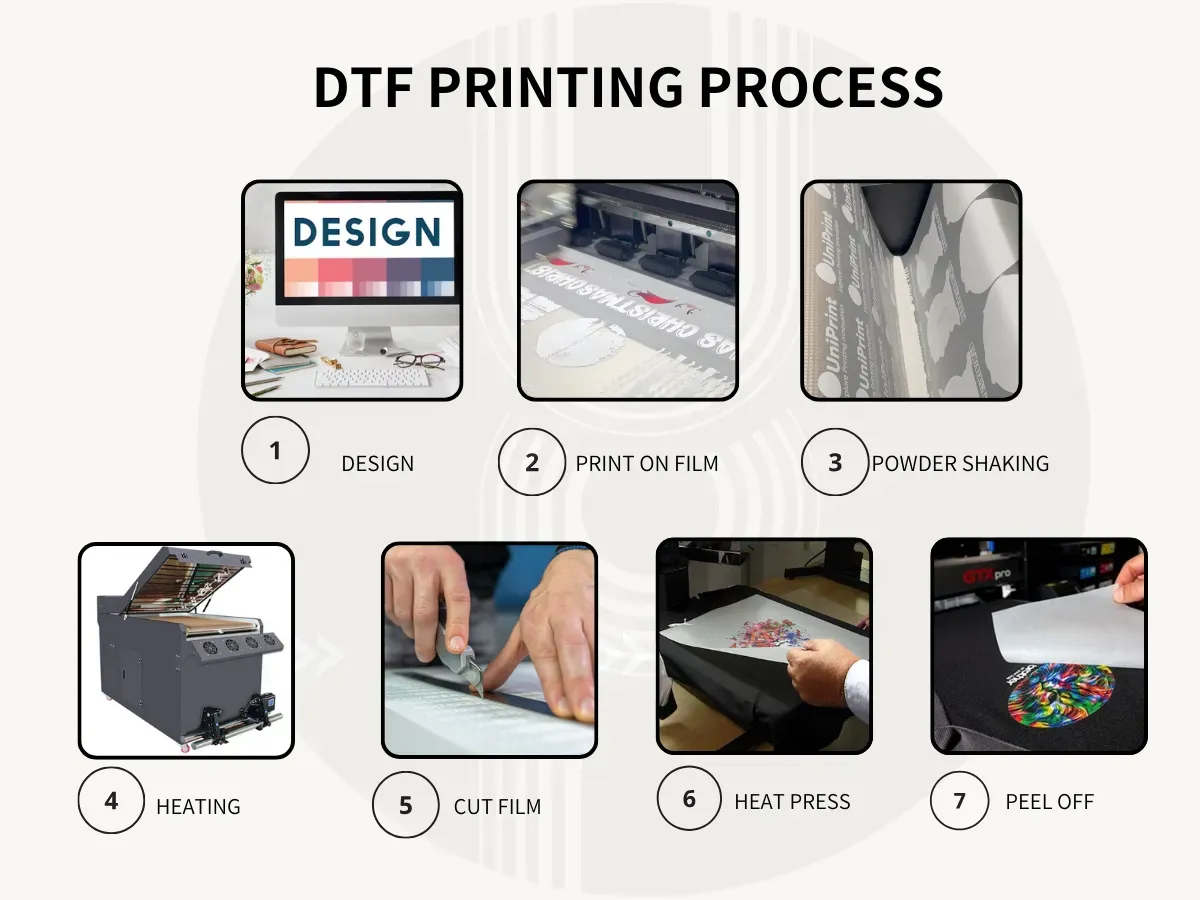
DTF printing is transforming how brands bring vibrant, durable graphics to apparel. Direct-to-Film technology uses specialized DTF inks and DTF transfer paper to deliver crisp designs with strong color on a wide range of fabrics. This on-demand approach is especially popular for custom apparel printing, enabling fast turnaround and flexible runs. Unlike older methods, the transfers are embedded into the fibers for durability and wash fastness, even on blends and dark fabrics. Whether you’re a creator or a small shop, this guide explains the essentials from equipment to best practices so you can start with confidence.
Beyond the basics, this process can be described as a film-based transfer or print-on-film technique that moves designs onto textiles. In practical terms, a printed PET film carrying the artwork is heat bonded to fabric, with white underlay and a protective layer forming a durable result. When comparing DTF vs DTG, consider order size, fabric types, and required color fidelity, since DTF generally handles small runs and dark fabrics more efficiently. LSI-friendly terms such as direct-to-film transfers, DTF inks on transfer paper, and custom apparel printing workflows help search engines connect related concepts. With the right setup and color management, this approach can power a scalable line of apparel with reliable adhesion and vibrant graphics.
DTF Printing: The Direct-to-Film Advantage for Custom Apparel Printing
DTF Printing, short for Direct-to-Film printing, represents a flexible on-demand pathway to high-quality garment graphics. By printing a design onto a PET film with DTF inks, including a white ink layer to ensure opacity on dark fabrics, and finishing with an adhesive powder, the transfer is then bonded to fabric with heat and pressure. The result is a vibrant, durable image embedded in the fibers rather than sitting on top of them, making it ideal for custom apparel printing.
This method shines in small runs and personalized designs because it minimizes setup and color-separation needs that traditional screen printing requires. DTF printing handles a wide range of fabrics—from cotton and blends to polyester—so your product lineup can scale without sacrificing color fidelity. Compared with other methods, the Direct-to-Film workflow offers consistent results across batches and simplifies on-demand production. The use of DTF inks ensures bright, color-accurate results that adhere well to various materials.
DTF Inks and Transfer Paper: Selecting Materials for Vibrant, Durable Transfers
Choosing the right DTF inks and DTF transfer paper is essential for color accuracy and long-term durability. The white ink layer is critical for opacity on dark fabrics, enabling bold colors to pop, while the color inks render the full spectrum of hues in your design. The transfer paper should hold the printed image well and release cleanly under heat, producing crisp edges and minimal dot gain.
Adhesive powder quality and particle size influence the feel of the finished transfer and its wash resistance. When shopping for DTF transfer paper and inks, consider color management compatibility with your RIP software, wash durability, and the expected wear of your garments. Selecting reliable DTF inks and transfer paper helps maintain consistent results across runs and supports professional custom apparel printing outcomes.
Understanding Direct-to-Film vs. DTG: Which Is Right for Your Small-Batch Needs
In many scenarios, Direct-to-Film (DTF) offers a more economical path for small runs and variable designs than Direct-to-Garment (DTG). DTF prints on a wide fabric range, including blends and dark fabrics, because the white ink layer provides opacity without extensive pretreatment. This makes DTF a strong option for custom apparel printing where order sizes fluctuate.
DTG typically delivers a very soft hand-feel on light fabrics but often requires pretreatment and longer setup for multi-color artwork. For small batches or designs with frequent color changes, DTF’s straightforward transfer workflow can reduce production time and maintenance, while still delivering durable, high-quality results. Comparing DTF vs DTG helps brands choose the method that best fits their fabric portfolio and delivery timelines.
Getting Started with DTF Printing Equipment: Printers, Papers, and Heat Press Setup
Set up a reliable DTF workflow with a printer configured for white and color inks, a compatible DTF transfer paper, PET film, adhesive powder, and a sturdy heat press. A RIP software and color management system keep color profiles consistent, ensuring predictable results across batches. Starting with the right combination of DTF inks and transfer paper lays the foundation for a smooth custom apparel printing pipeline.
Invest in proper curing, dust-free handling, and regular maintenance for the printer and heat press to preserve print quality. Understanding the interaction between DTF inks and transfer paper helps you optimize color accuracy and adhesion, enabling smooth custom apparel printing pipelines and scalable production.
Substrate Compatibility and Fabric Prep for Successful DTF Transfers
DTF works across cotton, cotton blends, poly blends, and many synthetics, with dark fabrics benefiting from the white ink layer for opacity. Material choice and fabric weight influence transfer thickness and hand-feel, so align your fabric portfolio with the adhesive and ink properties to produce reliable results. Testing on textiles in your product line helps ensure color fidelity and durability across often-used substrates.
Plan fabric pre-treatment, pre-washing, and swatch testing to minimize dye migration and ensure stable adhesion during heat pressing. Testing across frequent fabrics helps calibrate color and transfer performance for your custom apparel printing line, enabling you to expand offerings without sacrificing quality.
Quality Control, Troubleshooting, and Care for DTF Printed Garments
Establish standard operating procedures for printer calibration, color management, powder application, curing, and heat transfer to maintain consistency. Regular swatch testing and log-keeping help track color accuracy and adhesion across batches, supporting reliable custom apparel printing results. Integrating ICC profiles and RIP-driven workflows improves repeatability for large or expanding catalogs.
Common issues such as white ink scumming, powder ghosting, or edge curling can be addressed by proper curing, even powder distribution, and stable film storage. Provide clear care instructions—wash inside-out, use mild detergents, avoid high heat—so customers enjoy durable designs that stay vibrant through many washes. Ongoing maintenance and troubleshooting practices help sustain quality as your production scales.
Frequently Asked Questions
What is DTF printing and how does Direct-to-Film work with DTF inks and DTF transfer paper?
DTF printing is a heat-transfer method that starts by printing a design onto a PET film using DTF inks, with a white ink layer to ensure opacity on dark fabrics, followed by an adhesive powder and a heat-press transfer. The printed sheet is captured by specialized DTF transfer paper, which carries the image into the fabric during heat and pressure. This Direct-to-Film workflow is versatile for custom apparel printing across a wide range of fabrics and colorways.
DTF vs DTG: How does Direct-to-Film printing compare for custom apparel printing?
DTF printing is typically more economical for small runs and designs with variability, delivering strong color on many fabrics, including dark fabrics, via a print-and-transfer process using DTF inks and transfer paper. DTG prints directly on the garment with water-based inks and often requires pretreatment for dark fabrics, which can yield a softer hand-feel on light fabrics but higher setup, maintenance, and ongoing costs.
What materials do I need for DTF printing and what role do DTF inks and transfer paper play?
Key materials include a DTF printer capable of white ink, DTF transfer paper, PET film, white and color DTF inks, adhesive powder, a heat press, and RIP software for color management. DTF inks provide vibrant color and opacity (white ink is essential for dark fabrics), while the DTF transfer paper is designed to hold the printed design and transfer it cleanly during heat application.
How durable are DTF transfers and what care steps maximize longevity for custom apparel printing?
DTF transfers are designed for durability when properly cured and bonded. To maximize longevity, turn garments inside out before washing, use mild Detergents, wash cold to warm, and air-dry or tumble-dry on low heat. Avoid direct high heat on the transfer and follow recommended curing times and temperatures to maintain bond strength.
Can DTF printing be used on different fabrics and which fabrics work best with DTF transfer paper?
DTF printing works on cotton, cotton blends, poly blends, and many synthetic fabrics. Dark fabrics benefit the most from the white ink layer for opacity, while lighter fabrics may require less adhesive depth. Always run fabric-specific tests to verify color accuracy, adhesion, and durability, especially on blends or high-synthetic-content fabrics.
What are common troubleshooting steps in DTF printing (white ink opacity, powder ghosting, color shifts) and how can I fix them?
Common issues include white ink opacity problems, powder ghosting, film curl, and color shifts after washing. Fixes include calibrating white ink and color profiles, ensuring even powder application with proper pre-curing, storing film properly to prevent curl, and confirming cure temperature and dwell time as well as fabric compatibility. Documenting a standard operating procedure and performing regular printer maintenance helps prevent recurrence.
| Aspect | Key Points |
|---|---|
| What is DTF printing? | DTF printing stands for Direct-to-Film. It prints designs on a PET film using white and color inks, then applies adhesive powder and uses heat to transfer the image to fabric, producing a high‑resolution image embedded in the fibers. |
| Why choose DTF? | Offers flexibility for on‑demand orders and small runs, supports a broad range of fabrics, and avoids the need for separate color separations for multi‑color artwork. |
| KeyMaterials & Equipment | DTF printer with white ink capability; DTF transfer paper; PET film; white and color inks; adhesive powder; heat press; RIP software and color management tools. |
| DTF Inks and Transfer Paper | Inks must bond with the adhesive; white ink provides opacity on dark fabrics; transfer paper should yield sharp edges and reliable transfers; adhesive powder size affects feel and durability. |
| The DTF Printing Process | Prepare the design; print onto DTF transfer paper with a properly laid white layer; apply adhesive powder; cure the powder; trim; transfer with heat and pressure; peel and cool. |
| Best Practices | Calibrate color with ICC profiles; run test prints on similar fabrics; pre‑treat fabrics as needed; maintain heat press settings; ensure complete curing and proper post‑processing care. |
| DTF vs DTG | DTF is often more economical for small runs and variable data and handles a broader fabric range, including darks; DTG can offer a softer hand on light fabrics but requires pretreatment and more maintenance. |
| Substrate Compatibility & Color | DTF works on cottons, blends, poly blends, and many synthetics. Dark fabrics benefit from white ink opacity; always test fabrics for color accuracy and durability. |
| Durability and Care | Transfers resist laundering with proper care: inside‑out washing, mild detergents, cold to warm water, gentle cycles, and air‑dry or low heat; avoid ironing directly on the transfer. |
| Challenges & Troubleshooting | Common issues include white ink scumming, powder ghosting, film curl, color shifts after washing, and uneven adhesion; address through calibration, proper curing, and careful handling. |
| Quality Control & Improvement | Develop SOPs for calibration and transfer settings; run swatch tests on frequent fabrics; log results for continuous improvements; perform regular printer maintenance. |
| Cost, Practicality & Scalability | Initial investment includes printer, inks, transfer papers, PET film, adhesive powder, and a heat press. Costs scale with color count and design complexity; batch printing and workflow optimization improve efficiency. |
Summary
DTF printing offers a versatile, cost effective path for modern apparel production. It enables vibrant multi color designs across a broad range of fabrics with an on demand workflow. By focusing on the Direct-to-Film process, selecting reliable DTF inks and transfer papers, and implementing solid color management and quality control, brands can deliver durable, market ready transfers that meet customer expectations. This guide outlines core concepts, equipment considerations, and best practices to help you establish a successful DTF printing program for custom apparel.