
UV DTF transfer opens a new frontier for professional apparel decoration, delivering sharp detail and vibrant color with a durable finish. When you explore UV DTF printing on apparel, you’ll see how digital precision pairs with a wash-fast, eye-catching result. This method offers crisp edges and broad fabric compatibility, making it a strong choice for durable garment transfers. For designers weighing options, a comparison like UV DTF transfer vs standard DTF can highlight curing behavior, substrate compatibility, and cost. If you’re curious about how to apply UV DTF transfers, this guide covers practical steps, tips, and best practices to ensure lasting wear.
Beyond the headline terms, this technology relies on UV-curable inks printed onto a transfer film, then pressed onto fabric. Seen as digital garment decoration, it combines high-resolution artwork with a durable bond that withstands repeated washing. In practical terms, the process shares DNA with other print-on-film methods but emphasizes speed, on-demand capability, and fabric versatility. Web-friendly discussions about substrate compatibility, curing choices, and post-press care help designers evaluate which approach fits cotton, blends, and polyester best. By understanding these semantically related concepts, you can compare options more effectively and choose a solution that aligns with your clothing line.
UV DTF Printing on Apparel: What It Is and Why It Matters
UV DTF printing on apparel merges the precision of digital design with the durability of UV-curable inks pressed onto a transfer film. The result is high-resolution images with a broad color gamut and sharp edges that translate well to fabrics, making it ideal for complex artwork, photos, and small runs where traditional screen printing may not be the most cost-effective option.
This approach is especially well-suited for a variety of fabrics, including cotton, blends, and performance materials. Because the inks cure with UV light, you can achieve vibrant, lasting results on dark and light garments alike, with fewer steps and less setup compared to some conventional methods. If you’re aiming for professional-quality apparel, UV DTF transfer offers a balance of detail, speed, and compatibility that can elevate small-batch branding and on-demand production.
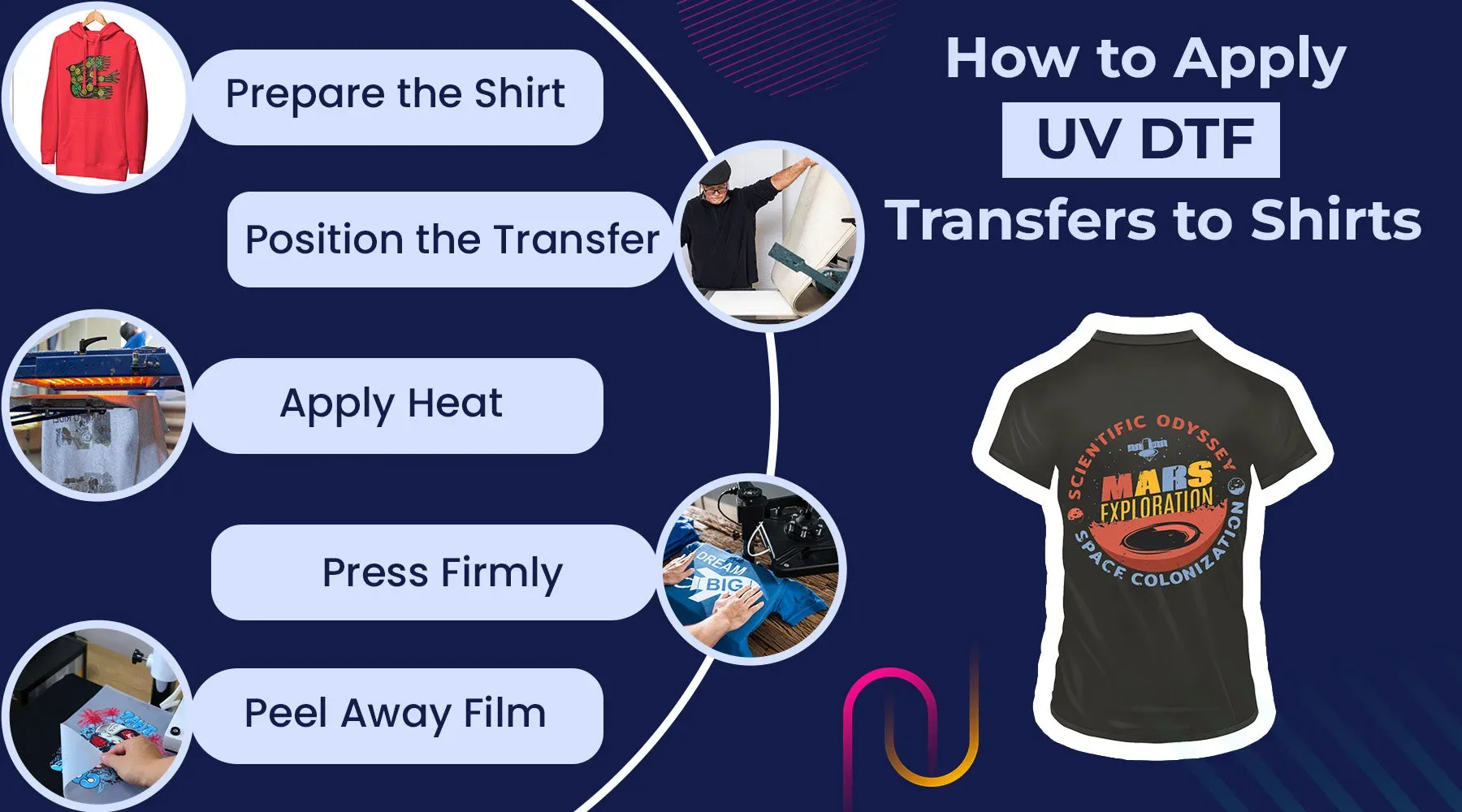
How to Apply UV DTF Transfers: Step-by-Step Process
If you’re exploring how to apply UV DTF transfers, start with artwork optimized for transfer. Ensure clean edges, proper color management, and consider a white underprint or underbase for light-on-dark designs to maximize opacity and depth on the garment.
Print the design on the transfer film using a UV-curable printer, then cure the printed film as needed to fix the image before transfer. Follow with garment prep, precise alignment, and controlled heat-and-pressure transfer to produce durable, long-lasting results. Finally, peel while warm or after cooling according to film guidelines and perform a wash test to verify adhesion.
Durable Garment Transfers: Longevity and Care with UV DTF
Durable garment transfers are a hallmark of the UV DTF approach when applied correctly. Proper curing, even pressure, and consistent heat help the image resist cracking and fading through repeated washes and wears, preserving detail and color integrity.
To maximize longevity, follow care guidelines like turning garments inside out, washing in cold-to-warm water, avoiding high-heat drying, and using mild detergents. Protect the print from direct sunlight when stored, and consider a light post-press cure to reinforce the bond if needed.
UV DTF Transfer vs Standard DTF: Key Differences for Fabric and Runs
UV DTF transfer offers a distinct set of advantages over standard DTF, particularly in edge sharpness and faster curing thanks to UV exposure. These factors can yield brighter colors and crisper details, though results still depend on the specific printer, inks, and transfer film used.
When compared with sublimation or traditional screen printing, UV DTF generally provides better performance across a broader range of fabrics and substrates, including darker garments. It shines for small runs or on-demand prints, reducing setup time and cost, while still delivering vibrant, durable results.
Tools, Materials, and Pre-Press Essentials for UV DTF Printing on Apparel
To achieve professional results with UV DTF printing on apparel, assemble a UV-curable printer (or a UV DTF-capable setup) with the correct transfer film and release liner. You’ll also need a heat press or platen press with precise temperature and pressure control, plus a clean, pre-warmed workspace for pre-press prep.
Prepare design files at 300 dpi or higher with proper color profiles, and consider a UV curing option if your workflow requires immediate curing after printing. Having alignment aids, lint-free environment protocols, and a plan for post-press testing will help you maintain consistency across runs.
Troubleshooting and Best Practices for UV DTF Transfers
Even with the best setup, challenges can arise such as color shifts, adhesion issues, or misregistration. Verify ink profiles and curing strength, ensure proper pre-press and dwell times, and check fabric compatibility with the transfer adhesive to prevent peeling or cracking.
Adopt best practices like using alignment guides, testing on small samples before full production, and maintaining consistent heat and pressure across the garment. Handling dust, lint, and oils, using a quality release sheet, and considering a light post-press cure can help you achieve durable garment transfers that retain vivid color and fine detail over many washes.
Frequently Asked Questions
What is UV DTF transfer and how does UV DTF printing on apparel work?
UV DTF transfer is a direct-to-film process that uses UV-curable inks printed on a transfer film, which is then pressed onto garments. This method yields high-resolution images with a wide color gamut, making it ideal for UV DTF printing on apparel, especially for complex artwork and small runs. After printing, the film is cured if your system supports it, and then heat pressed onto the fabric to create durable garment transfers.
How durable are UV DTF transfers and how should you care for durable garment transfers?
When properly applied, UV DTF transfers offer excellent durability, resisting cracking and fading through many washes. To maximize longevity: turn garments inside out, wash cold or warm, use mild detergent, avoid chlorine bleach, and air dry or use low heat. A post-press can help set the bond for endurance.
UV DTF transfer vs standard DTF: what are the key differences?
UV DTF transfers use UV-curable inks and often cure instantly, delivering sharper edges and faster production than standard DTF. They tend to perform better on a wider range of fabrics, including dark garments, and offer strong color saturation with lower setup for small runs. However, curing equipment and film compatibility can influence results.
How to apply UV DTF transfers?
Print on the transfer film with a UV printer, cure if required, pre-press the garment to remove moisture and wrinkles, position the transfer, and apply heat and pressure at about 140 to 160 degrees Celsius for 10 to 20 seconds with even pressure. Peel the film while warm or after it cools according to the film guidelines, then perform a post-press if recommended and test durability with a wash.
Which fabrics work best with UV DTF printing on apparel?
UV DTF printing on apparel works well on cotton, blends, polyesters, and performance fabrics, providing vibrant results across fabric types. Dark fabrics may require a white underbase for opacity. Always test adhesion on a fabric sample before production.
What are common challenges with UV DTF transfer and how do you troubleshoot?
Common challenges include color shifts, adhesion issues, peeling, and misregistration. Troubleshoot by verifying ink profiles and curing strength, ensuring proper pre-press and dwell time, using a quality release sheet, and performing test prints with careful alignment before full runs.
| Topic | Key Points |
|---|---|
| What is UV DTF Transfer | Direct-to-film printing using UV-curable inks; print on a transfer film, then press onto garments for high‑resolution designs with a wide color gamut. Ideal for complex artwork and small runs; commonly referred to as UV DTF transfer or UV DTF printing on apparel. |
| Why Choose UV DTF for Apparel | Vibrant color and detail; compatible with cotton, blends, polyesters, and performance fabrics; fast turnaround for small runs; durable transfers resistant to cracking and fading; lower upfront tooling and strong customization options. |
| Tools, Materials, and Prep | UV-curable printer with suitable transfer film and release liner; heat press with precise temperature/pressure; pre-press setup; design at 300 dpi or higher; optional UV curing lamp for immediate curing. |
| Step-by-Step: How to Apply UV DTF Transfers | Prepare artwork; print on transfer film; cure if available; pre-press garment; position transfer; apply heat/pressure (approx. 140–160°C, 10–20 seconds, even pressure); peel warm or cold; post-press care and wash testing. |
| Tips for Best Results | Pre-press and stable temperature; keep transfer and garment free of dust/oils; use a quality release sheet; test on a small sample; align precisely to avoid misregistration. |
| UV DTF Printing vs Other Methods | Compared with standard DTF: often sharper edges and faster drying with UV curing; color richness varies with inks/film. Compared with sublimation: works on a broader fabric range and dark garments; not limited to polyester. Compared with screen printing: ideal for low-volume, on-demand runs with lower setup costs. |
| Common Challenges and Troubleshooting | Color shifts or fading; adhesion issues; peeling or cracking; ghosting/misregistration. Remedies: verify ink profile and curing, ensure proper pre-press and dwell time, confirm fabric compatibility, use alignment guides, and perform test prints. |
| Care, Maintenance, and Longevity | Turn garments inside out; wash cold; avoid high heat drying; use mild detergents; avoid chlorine bleach; store away from direct sunlight to preserve color. |
| Glossary and Quick Comparisons | UV DTF transfer: UV-curable inks printed on transfer film for garment application. UV DTF printing on apparel: creating designs on transfer media for clothing. How to apply UV DTF transfers: step-by-step workflow. Durable garment transfers: designed to withstand repeated washes. UV DTF transfer vs standard DTF: key differences in curing, edge sharpness, and substrate range. |
Summary
UV DTF transfer is a robust option for professional-quality apparel, offering vibrant color, broad fabric compatibility, and an asset-light workflow that suits small businesses and designers. By combining UV-curable inks with a direct-to-film workflow, it delivers crisp details, strong durability, and excellent performance on both dark and light fabrics. Proper preparation, precise heat and pressure, and careful design optimization are essential to maximizing adhesion and wash-fastness. Whether producing custom tees, branded hoodies, or athletic wear, UV DTF transfers provide a compelling path to vivid, long-lasting images.