
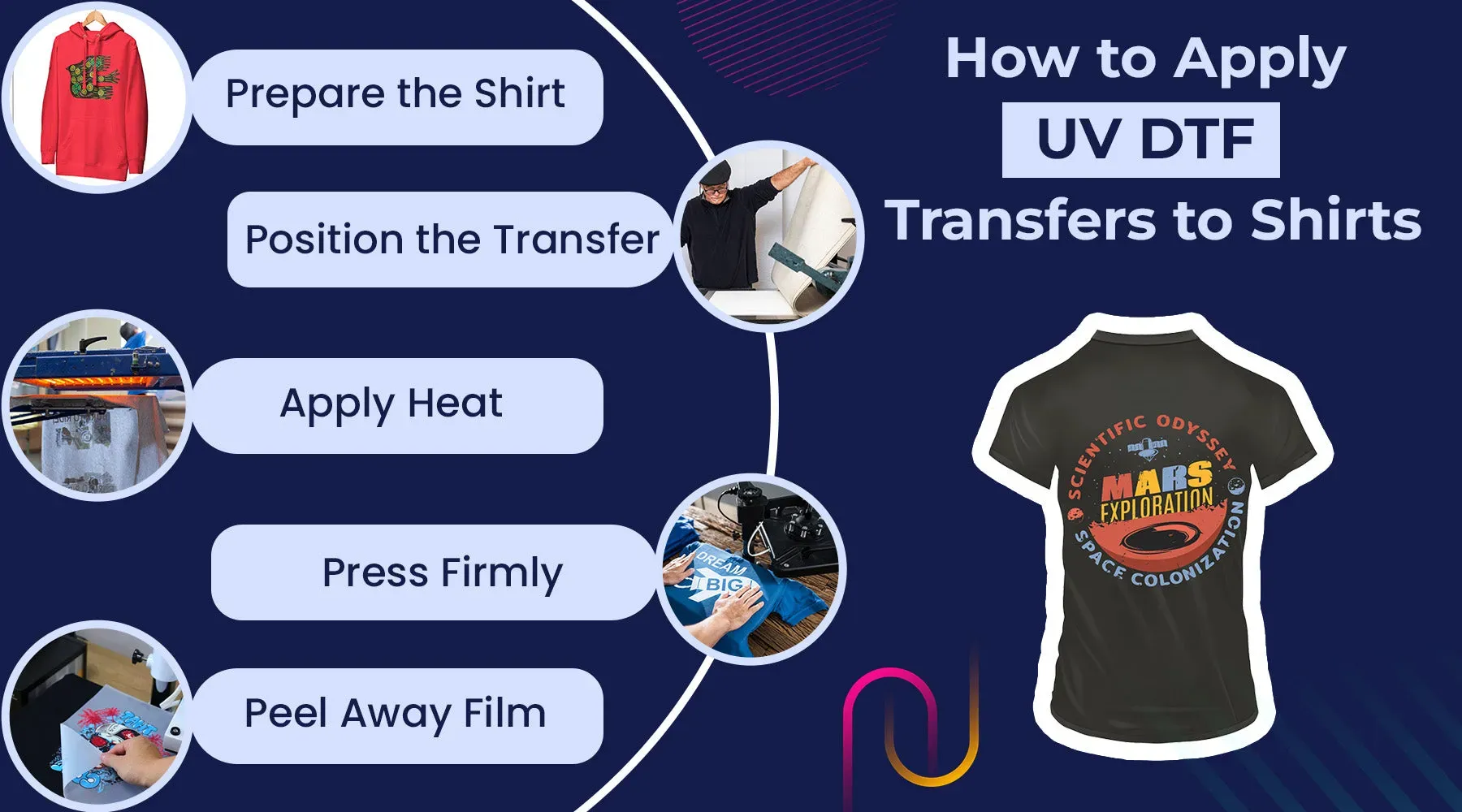
UV DTF transfer opens exciting possibilities for designers and brands in the world of custom apparel. By combining the sharp detail of UV printing on garments with the versatility of transfer workflows, it delivers bold color and easier application. This approach supports precise color management and quick turnarounds across a variety of fabrics. It also complements traditional DTF printing by delivering cleaner edges and stronger results for typography and photography. For brands exploring new avenues in custom apparel design, UV DTF transfer offers a flexible path to standout designs.
A film-based UV printing approach brings artwork onto fabrics via a UV-curable ink layer applied to a transfer sheet. In this process, designs are prepared on a backing film, then transferred to textiles with heat, yielding sharp graphics without direct-to-garment printing. Some brands describe it as a direct-to-film method or a UV-curable transfer technique, emphasizing speed, color fidelity, and versatility across fabrics. From an LSI perspective, Latent Semantic Indexing guides us to include related concepts such as film-based decoration, heat transfer, and fabric-friendly inks, which helps designers communicate clearly while exploring new options for custom apparel design.
1. Understanding UV DTF transfer: What it is, how it works, and why it matters for UV printing on garments
UV DTF transfer uses UV-curable inks printed onto a transfer film, which is then applied to fabric with heat and pressure. The UV curing step locks in color and detail immediately, reducing color bleed and improving edge sharpness for complex graphics, photographs, and text. Because the artwork is created on a film rather than directly on the garment, designers gain flexibility in color management, layering, and quality control before the garment is pressed. This process aligns closely with the needs of UV printing on garments and complements traditional DTF printing by delivering enhanced color fidelity and faster turnarounds when compared to screen printing or vinyl transfers.
For custom apparel design, UV DTF transfer offers a practical balance of durability and versatility. The film-based workflow supports neon gradients, high-contrast imagery, and small type with crisp edges, making it especially suitable for limited editions, art-inspired tees, and branded merch. It also provides a straightforward path to quality control before transferring to cotton, cotton blends, or select synthetics, highlighting fabric compatibility UV DTF as a key consideration in the production plan.
2. Creative applications in custom apparel: leveraging UV DTF transfers for standout designs
The range of creative applications for UV DTF transfer in custom apparel is broad. Photo-realistic graphics and portrait work benefit from the film-based workflow that preserves subtle color shifts and skin tones with high fidelity, ideal for limited-edition tees, art hoodies, and charity apparel. Bold typography and logo work also translate well, with clean edges that remain legible across garment sizes, reinforcing a strong brand presence in a variety of fabrics.
Gradients, textures, and soft imagery benefit from the consistent handling of UV-curable inks, enabling smooth transitions and fine halftones beyond what some other transfer methods can reliably achieve. All-over patterns and repeat artwork can be explored with careful layout and multiple panels to create cohesive drops or full-bleed looks on apparel lines, while specialty fabrics and blends can be addressed with appropriate curing and pressing parameters to support custom apparel design goals.
3. Fabric compatibility and care considerations for UV DTF transfers
Fabric choices strongly influence the performance of UV DTF transfers. Cotton and cotton blends typically deliver vibrant color and solid adhesion, while synthetics and polyesters may require adjusted temperatures or press times to prevent edge curling or color shifts. Documenting fabric type, composition, and care instructions helps guide end-users and retailers, and pre-testing on swatches remains a best practice for identifying potential issues before larger production runs.
Care guidance is essential to maintaining colorfastness and adhesion over time. End users should be advised to wash garments inside out in cool water and avoid harsh detergents or high-heat tumble drying. Clear care labels help preserve the impact of UV DTF transfers across programs that involve repeat orders or branded apparel lines, reinforcing long-term performance on a range of fabrics.
4. Color management and design strategies for UV DTF in custom apparel
Effective color management begins early: calibrate monitors, build substrate-friendly white baselines where needed, and align RIP settings with fabric choices to optimize color fidelity in UV DTF transfers. Planning color profiles and test prints helps prevent surprises on final garments, ensuring that the final piece aligns with the designer’s vision for UV printing on garments.
High-contrast imagery and strategic use of white ink on dark fabrics can dramatically improve opacity and vibrancy after transfer. White ink layers, when used judiciously, support light-on-dark effects without compromising wash durability. Designers should also test texture, halftone details, and fine typography on sample swatches to verify that photographic elements and small text remain sharp after heat application.
5. Workflow and production: from design to garment with UV DTF
A smooth workflow is essential for delivering consistent UV DTF transfers in a commercial setting. Start with high-resolution artwork, leveraging vector elements for logos and large-format pieces, paired with raster elements for photographic sections. Build explicit color separations and include a dedicated white layer if needed, and choose RIP software that supports UV DTF workflows to manage color, ink density, and curing parameters.
The printing-on-transfer-film step requires UV-curable inks and appropriate drying time before handling. After curing, carefully apply the transfer to the garment with heat and pressure, then perform post-press finishing and cooling to ensure full adhesion. Quality control should assess color accuracy, edge sharpness, and any transfer defects, with simple wash tests to confirm performance over time across common garment types.
6. Cost, comparisons, and market opportunities with UV DTF transfers
When evaluating UV DTF transfer against other methods—such as screen printing, vinyl, or standard DTF transfers—consider upfront equipment costs, consumables, and the potential for automation to reduce per-unit costs on smaller runs. While initial investments in UV-curable inks and transfer films may be higher, automation and shorter setup can lower unit costs over time, and faster turnarounds support on-demand production for limited editions and prototyping.
Compared with traditional DTF printing, UV DTF often yields crisper edges and more stable color on a wider range of fabrics, provided that white ink layering and curing parameters are well managed. This creates market opportunities for brands aiming at high-fidelity graphics, custom apparel design studios seeking rapid prototyping, and retailers delivering limited-run collections. Effective workflow design, robust color management, and proactive quality assurance remain critical to maximizing return on investment in UV DTF transfers.
Frequently Asked Questions
What is UV DTF transfer and how does it differ from traditional DTF printing?
UV DTF transfer uses UV-curable inks printed onto a transfer film, which is then heat pressed onto fabric. The UV curing locks color and detail on the film before transfer, producing crisp edges and reduced color bleed compared to traditional DTF printing. This direct-to-film transfer workflow offers faster turnarounds and more flexible color management for custom apparel design.
Is UV DTF transfer suitable for all fabrics, and what fabric compatibility considerations apply?
UV DTF is versatile, but fabric compatibility varies. Cotton and cotton blends typically yield vibrant results with strong adhesion, while synthetics and polyesters may require adjusted temperatures or press times. Pre-test on fabric swatches, document the fiber type, and tailor curing and pressing parameters to the fabric to ensure colorfastness and adhesion.
What are the key advantages of UV DTF transfer for custom apparel design?
The technique delivers sharp detail and photo realism, bold typography, and strong color on a range of fabrics. It supports all-over or panel prints, provides stable color on dark garments, and integrates well with the direct-to-film transfer workflow for flexible production in custom apparel design.
How can you ensure color accuracy and edge sharpness in UV DTF transfers?
Establish a reliable color workflow by calibrating your monitor, using a RIP that supports UV DTF, and including a dedicated white layer for light-on-dark designs. Test on swatches, optimize ink density and curing parameters, and review edge crispness before production.
What is the typical workflow from design to garment for UV DTF transfers?
Concept and artwork, RIP setup, printing on transfer film with UV-curable inks, curing the film, transfer application to the garment, post-press finishing, and quality control. The process emphasizes robust color management and repeatable results in direct-to-film transfer.
What care and durability considerations should customers know for UV DTF transfers?
Provide care guidance: wash inside out in cool water, avoid harsh detergents and high heat tumble drying. Proper curing and a follow-up wash test help ensure colorfastness and adhesion over time for UV DTF transfers on garments.
| Key Point | Description |
|---|---|
| What is UV DTF Transfer? | A process that prints artwork with UV-curable inks onto a transfer film, which is then applied to fabric with heat and pressure. UV curing locks in color and detail immediately, improving sharpness and reducing color bleed. The film-based approach offers pre-press color management and quality control, with strong suitability for neon gradients, high-contrast imagery, and small text; it can complement traditional DTF for better color fidelity and faster turnarounds. |
| Creative Applications | Photo-realistic graphics and portraits; bold typography and logos; gradients and textures; all-over patterns with careful layout and multi-panel work; adaptable to various fabrics (cotton, blends, some synthetics) with proper curing. |
| Design Strategies & Color Management | Plan color profiles early, use high-contrast imagery, leverage white ink for light-on-dark effects, test textures, and optimize wash durability through testing and protocols. |
| Workflow (Design to Garment) | Concept/artwork creation, RIP setup, printing on transfer film, UV curing, transfer application, post-press finishing, and quality control including wash-testing for longevity. |
| Materials, Fabric Compatibility & Care | Cotton and blends typically yield strong adhesion; synthetics may require adjusted temperatures or press times. Document fabric type and care instructions; pre-test on swatches. Advise washing inside-out in cool water and avoiding harsh detergents/high heat to maintain colorfastness and adhesion. |
| Cost Considerations & Comparisons | Higher upfront costs for UV inks and transfer films, but potential per-unit savings with automation and shorter setup for small runs. Faster turnarounds and crisper edges vs standard DTF, screen printing, or vinyl transfers; manage white ink layers and curing parameters for optimal results. |
Summary
UV DTF transfer is a dynamic option for creative apparel, blending the precision of UV printing with the flexibility of the DTF transfer workflow to deliver vivid imagery, crisp typography, and durable performance across fabrics. Designers and brands can achieve high-fidelity color on cotton, blends, and select synthetics while benefiting from thorough pre-press checks, robust color management, and reliable wash durability. With careful workflow planning, swatch testing, and clear care guidance, UV DTF transfer helps brands push boundaries, enable on-demand production, and stand out in a crowded market.