
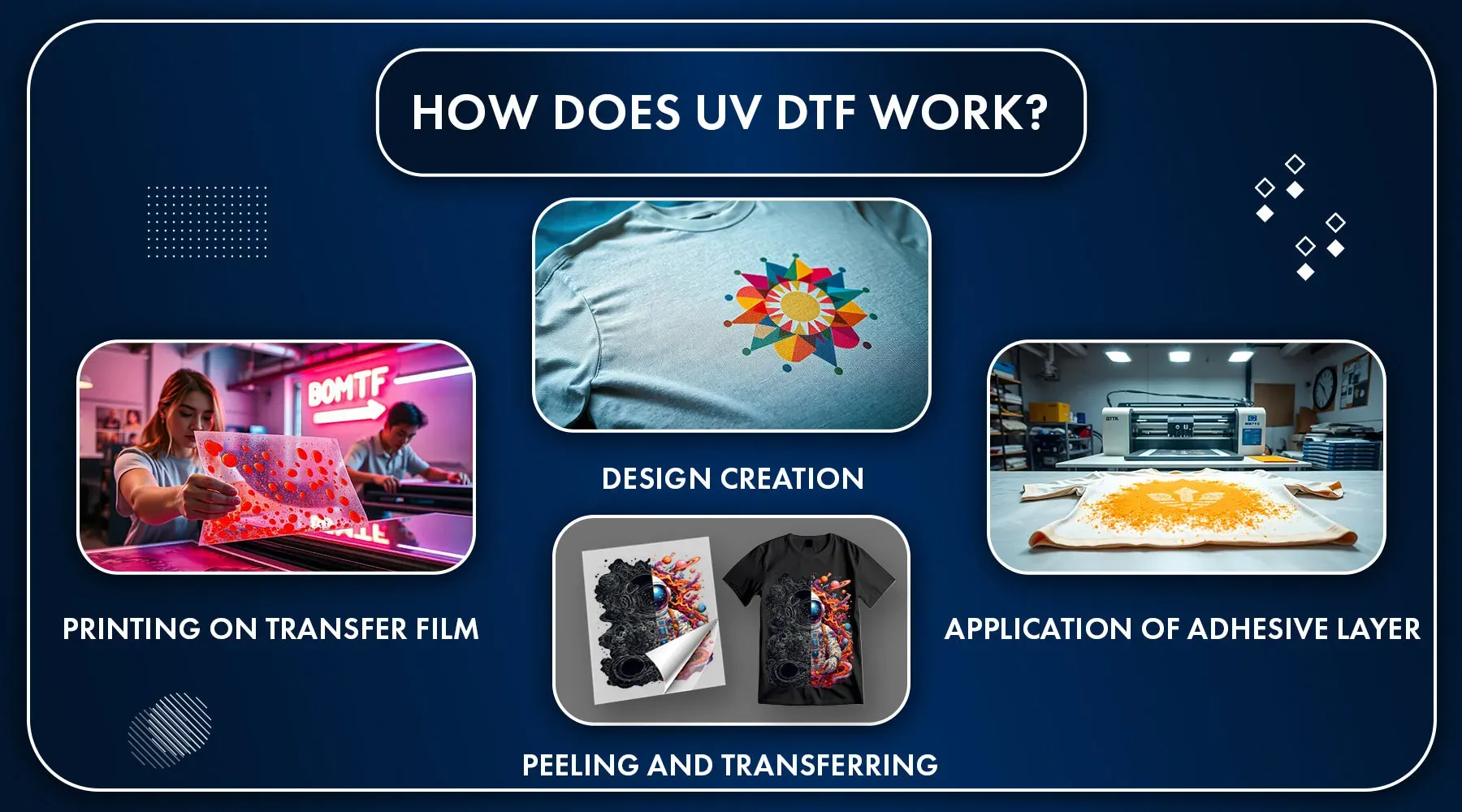
UV DTF transfer is redefining textile customization by marrying the versatility of direct-to-film methods with the speed and color precision of UV-curable inks. This technique delivers durable fabric prints across a broad range of materials, making it ideal for apparel, bags, and home decor. By looking at the DTF transfer process and the benefits of UV curing, you can see why UV printing on fabric yields vibrant heat transfer prints with clean edges. In the DTF vs sublimation comparison, UV DTF transfer often offers better substrate compatibility and faster production cycles. This introductory overview guides you through the basic workflow, materials, and best practices to achieve professional results.
Practically speaking, this approach uses a film or sheet that carries UV-curable ink to the fabric, binding with heat to create durable graphics. Described in other terms, the method sits at the intersection of direct-to-film printing and UV-curing pigment transfer, offering sharp detail on cotton, blends, and synthetic fabrics. Think of it as a high-definition textile transfer powered by fast-curing inks, suitable for on-demand designs, small runs, and market-ready decor.
1. Understanding UV DTF Transfer: Definition, Inks, and Film
UV DTF transfer combines the flexibility of direct-to-film printing with the instant cure of UV inks. By printing onto a transfer film with UV-curable inks and then applying heat, you achieve vibrant fabric prints with sharp detail and strong adhesion. This process aligns with the DTF transfer process while leveraging UV curing to speed up production and improve color stability on a range of textiles.
The result is a durable fabric prints outcome that can cover large areas with minimal color bleed. The use of UV-curable inks helps lock color quickly and reduces smudging during handling, making it a practical option for apparel, bags, and home decor. For designers evaluating options, UV DTF transfer often delivers vivid heat transfer prints that stay vibrant through washing and wear.
2. DTF Transfer Process vs. UV Printing on Fabric: Which Path Fits Your Production
When comparing DTF transfer process workflows to UV printing on fabric, the key difference is the transfer step. Traditional DTF relies on adhesive powders and a heat press to move the design from film to garment, while UV DTF transfer uses UV-curable inks and can shorten cure times and improve color longevity on certain fabrics.
UV printing on fabric offers direct-to-garment versatility for some designs, but UV DTF transfer adds a transfer layer that can simplify multi-color repro and bulk handling. For workloads that mix natural fibers with synthetics, UV DTF transfer often provides a practical balance between color fidelity, durability, and production efficiency, especially when considering DTF vs sublimation trade-offs.
3. Essential Materials and Setup for UV DTF Transfer
A successful UV DTF transfer starts with UV-curable inks and a printer capable of handling them, plus a transfer film compatible with UV ink. The setup also includes an adhesive layer or powder system if your workflow requires it, and a UV curing unit to lock the inks before transfer.
You’ll also need a heat press or laminator suitable for textiles, calibrated temperature and pressure controls, and appropriate fabrics such as cotton, cotton blends, or polyester blends. Color management matters, so prepare color profiles and test swatches to ensure the final result aligns with your expectations across different fabrics and film types.
4. Step-by-Step Workflow: From Design to Cured, Ready-to-Wear UV DTF Prints
Design and prepare high-resolution artwork, using vector graphics for sharp edges and planning for white or transparent areas as needed. Then print the design onto the UV transfer film with high DPI to ensure crisp edges, especially around fine details.
Cure the printed film with UV light to fix the inks, prepare the fabric by pre-pressing to remove moisture, and apply the transfer either with a light adhesive layer or directly, depending on your process. Align the film, press with the recommended heat, time, and pressure settings, then peel and, if required, complete any post-transfer curing to maximize color stability.
5. Durability, Color Fastness, and Care for Durable Fabric Prints
One of the main advantages of UV DTF transfer is durability. When properly executed, prints maintain bright color and crisp detail after multiple washes, contributing to durable fabric prints that hold up over time. Proper curing and adhesive use help prevent cracking and edge lifting, ensuring long-lasting performance.
Care plays a crucial role in maintaining vibrancy. Turn garments inside out before washing, use mild detergents, and avoid harsh solvents and high heat. Following best practices for care helps preserve the integrity of the design and ensures that the UV DTF transfer continues to deliver vibrant heat transfer prints season after season.
6. Applications, Market Opportunities, and Troubleshooting for UV DTF Transfer
UV DTF transfer opens opportunities for fashion brands, promo products, and on-demand printing. It’s well-suited for T-shirts, hoodies, tote bags, and home decor items where bright colors and durability are valued. For designers, this method offers flexibility across a range of fabrics and quick turnarounds, aligning with trends in on-demand production and limited-edition drops.
Common issues can be addressed with clear best practices: calibrate your printer for the chosen substrate, proof on swatches, and monitor curing times. Troubleshooting tips include addressing color mismatch, edge outlines, cracking after washing, and smearing pre-cure. By focusing on color management, substrate testing, and adherence to manufacturer guidelines, you can optimize outcomes and maximize the benefits of UV DTF transfer over other methods like traditional DTF or sublimation.
Frequently Asked Questions
What is UV DTF transfer, and how does it fit into the DTF transfer process?
UV DTF transfer uses UV-curable inks printed on a transfer film, which is cured with UV light and then applied to fabric with heat. It fits the DTF transfer process by replacing traditional inks with UV inks, enabling faster curing and durable color fidelity during the transfer.
How does UV printing on fabric differ in UV DTF transfer compared to direct UV printing on fabric?
In UV DTF transfer, the image is printed on film, cured, and then transferred to fabric, which simplifies multi-color designs and improves consistency across fabrics. Direct UV printing on fabric prints straight onto the material, which can offer fewer handling steps but may limit substrate compatibility and white base performance.
Are UV DTF transfers durable for apparel and home decor?
Yes. When properly cured and pressed, UV DTF transfer yields durable fabric prints that resist washing and wear, supporting long-lasting apparel and home decor items.
Can UV DTF transfer deliver vibrant heat transfer prints on a range of fabrics?
Yes, UV DTF transfer provides vibrant heat transfer prints with high color fidelity on cotton blends and polyesters, depending on the ink system and substrate.
DTF vs sublimation: which is better for UV DTF transfer projects?
DTF vs sublimation: UV DTF transfer offers broader substrate compatibility (including cotton blends) and easy post-production adjustments, while sublimation excels on polyester with bright, gradient-rich colors; choose based on fabric mix, color needs, and production scale.
What are the essential steps in applying a UV DTF transfer?
Key steps include: design preparation; printing on transfer film with UV inks; curing the film; pre-press the fabric; apply a light adhesive layer if required; align and press with heat; cool and peel; final cure or finish if needed.
| Topic | Key Points |
|---|---|
| What is UV DTF Transfer? | UV-curable inks printed on transfer film, heat-applied to fabric; produces vivid, durable prints with rapid color locking and reduced smudging; sits at the intersection of DTF and UV curing. |
| DTF transfer process (traditional vs UV variant) | Traditional DTF: print on film → apply adhesive powder → cure → transfer with heat. UV DTF: uses UV-curable inks and a UV cure step, enabling faster production and improved color stability on synthetic fabrics. |
| Durability & color quality | Vibrant color retention, crisp edges, and strong adhesion to cotton blends and polyesters; rapid curing reduces smear risk and enhances wash durability. |
| Materials & setup | UV-curable inks, transfer film compatible with UV inks, optional adhesive layer or powder, UV curing unit, heat press, and fabrics like cotton, blends, or polyester. |
| Color management & substrates | Calibrate printer to substrate; use color profiles; test swatches; fabric type and fiber content affect vibrancy and wash durability. |
| Applications & market | Suitable for apparel, bags, home decor, and promotions; well-suited for small runs and on-demand printing with fast turnaround and high color fidelity. |
| DTF vs sublimation | Sublimation excels on polyester with bright colors but limited on cotton; UV DTF transfer offers broader substrate compatibility and easier post-production on natural-synthetic blends. |
| Best practices | Use quality transfer film and UV inks, calibrate printer, pre-press fabrics, follow specified temperature/pressure/time, allow cooling before peeling, and test wash durability. |
Summary
UV DTF transfer offers a compelling option for those seeking durable fabric prints with vibrant color and efficient production. By understanding the DTF transfer process, selecting compatible materials, and following best practices for curing and pressing, you can achieve professional results that stand up to wear and washing. Whether you are printing a small run of custom tees or scaling up a line of products, UV DTF transfer provides a versatile path to high-quality, vivid, and durable prints on a wide range of fabrics.